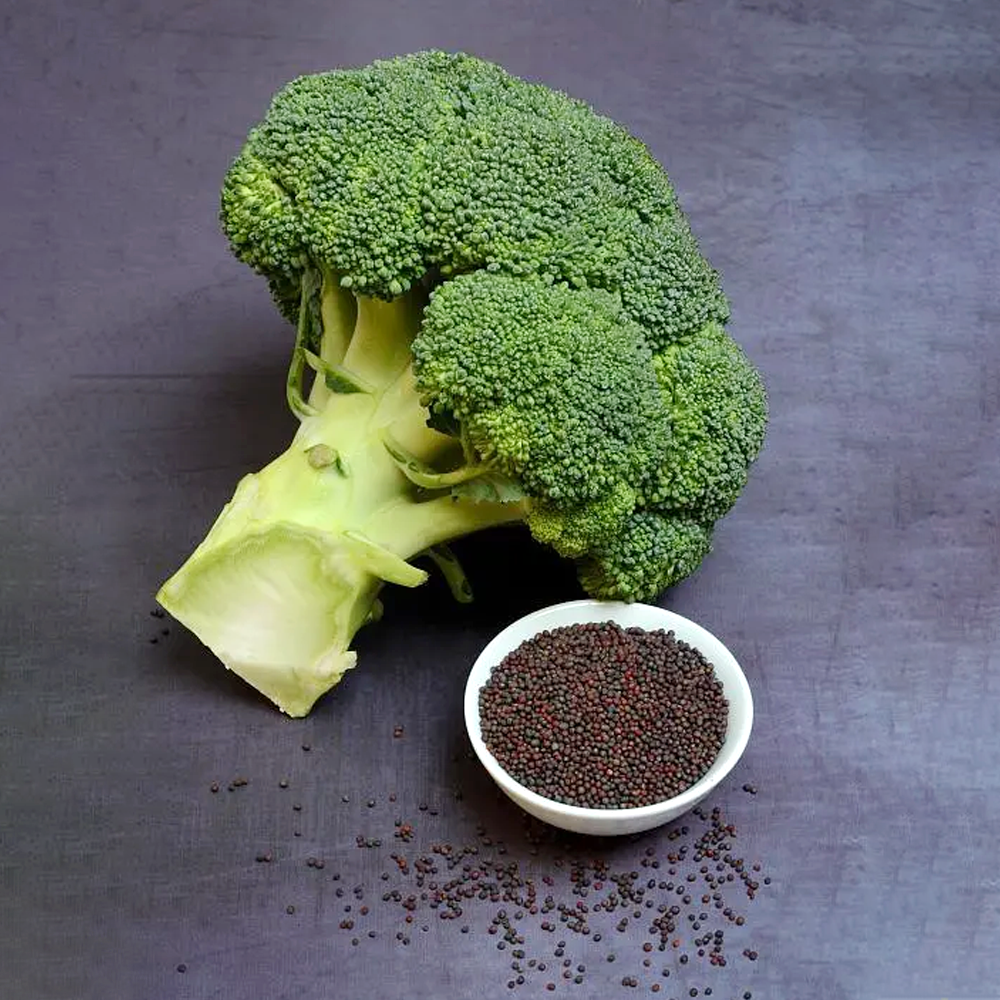
Broccoli Seed Extract: Glucoraphanin & Sulforaphane for B2B Formulation
Green Life Herb supplies standardized Broccoli Seed Extract for nutraceutical brands, contract manufacturers, functional-food developers, and ingredient importers. Our range is organized around two distinct sourcing routes: glucoraphanin, the naturally occurring glucosinolate precursor, and sulforaphane, the corresponding isothiocyanate.
Each route has different formulation, stability, and verification considerations. To support a technically sound purchasing decision, assay values are stated separately and verified by HPLC for the requested grade.
| Item | Broccoli Seed Extract (Glucoraphanin) | Broccoli Seed Extract (Sulforaphane) |
|---|---|---|
| Botanical source | Brassica oleracea L. var. italica | Brassica oleracea L. var. italica |
| Plant part | Seed | Seed-derived material |
| Marker compound | Glucoraphanin | Sulforaphane |
| Standard specifications | 10%, 13%, 20%, 40% HPLC | 1%, 5%, 10%, 98% HPLC |
| Assay method | HPLC | HPLC |
| Typical procurement focus | Precursor standardization and formulation flexibility | Defined sulforaphane assay and grade-specific stability review |
| Documentation | COA, TDS and SDS available on request | COA, TDS and SDS available on request |
Choose the Right Broccoli Seed Extract for Your Formula
Glucoraphanin-standardized Broccoli Seed Extract
Glucoraphanin is a glucosinolate naturally present in broccoli seed. It is the precursor to sulforaphane and is generally selected when a formulation requires a defined glucoraphanin marker, a broccoli-derived precursor format, or flexibility to design a separate myrosinase strategy.
Available specifications: 10%, 13%, 20%, and 40% glucoraphanin by HPLC.
This route is relevant for capsule, tablet, sachet, powder-blend, and selected functional-food projects. If conversion to sulforaphane is part of the finished-product concept, the customer should evaluate the enzyme source, delivery system, processing conditions, and finished-product testing plan.
Sulforaphane-standardized Broccoli Seed Extract
Sulforaphane is the isothiocyanate formed from glucoraphanin through myrosinase-mediated conversion. It is selected when a project requires a specified sulforaphane assay rather than a precursor assay.
Available specifications: 1%, 5%, 10%, and 98% sulforaphane by HPLC.
Because sulforaphane-containing materials can have grade-specific stability requirements, the selected specification, product form, carrier system where applicable, storage conditions, and shipping conditions should be confirmed during technical evaluation. The 98% grade should be assessed as a separate technical material and not assumed to share the handling profile of lower-assay grades.
Why the Distinction Matters
Glucoraphanin and sulforaphane are related, but they are not interchangeable assay claims. Myrosinase can convert glucoraphanin to sulforaphane; conversion and subsequent exposure can vary with the enzyme source, matrix, process conditions, and formulation design. Published human studies have therefore treated glucoraphanin-rich and sulforaphane-rich preparations as distinct interventions.
For procurement teams, this means that an assay report should identify the analyte being measured, the analytical method, the lot number, and the agreed specification. A single combined statement such as “1%–20% sulforaphane/glucoraphanin” does not provide sufficient information for formulation control or incoming-material approval.
Quality & Batch Verification
Green Life Herb supports buyer qualification with documentation appropriate to the selected grade and purchasing stage.
– Certificate of Analysis (COA): request the lot-specific assay result, product identification, and release information.
– Technical Data Sheet (TDS): use for grade selection, handling review, and internal specification setup.
– Safety Data Sheet (SDS): available for transport and workplace documentation.
– HPLC verification: ask for the assay method and, where required for your qualification process, a batch HPLC chromatogram.
– Additional testing: heavy metals, pesticide residues, microbiology, residual solvents, and third-party testing can be discussed against your target specification and market requirements.
Manufacturing, Traceability & Custom Project Support
Broccoli-derived actives require a sourcing approach that recognizes the difference between a precursor-standardized extract and a sulforaphane-standardized material.
Green Life Herb can discuss the relevant technical route before quotation, including the intended application, target assay, finished-product format, requested documentation, and destination market.
For qualified projects, the technical discussion may cover:
– grade selection between glucoraphanin and sulforaphane;
– assay target and HPLC verification expectations;
– sample evaluation before scale-up;
– documentation needed for supplier qualification;
– packaging configuration and shipment conditions; and
– customer-specific requirements for formulation or regulatory review.
Availability of custom specifications, packaging formats, and testing should be confirmed during quotation.
Scientific Background for Formulators
Glucoraphanin is a glucosinolate precursor found in broccoli. In the presence of myrosinase, it can be converted to sulforaphane [Fahey et al., *PLOS ONE*, 2015]. The conversion route is relevant to formulation because myrosinase source and activity, matrix composition, and delivery conditions may affect the amount of sulforaphane formed.
Human crossover research has evaluated glucoraphanin-rich and sulforaphane-rich broccoli preparations as different delivery formats, supporting the need to define the marker compound in the incoming-material specification rather than treating the two assays as interchangeable ([Egner et al., *Cancer Prevention Research*, 2011]. A randomized crossover study of a glucoraphanin-rich broccoli seed extract also found higher sulforaphane-metabolite recovery when an exogenous myrosinase source was included; this finding is relevant to formulation design, but it is not a substitute for testing the final product [Mastaloudis et al., *Scientific Reports*, 2026].
This page provides ingredient-identification and sourcing information only. It does not make disease-treatment, prevention, or therapeutic claims. Finished-product claims, dosage, safety assessment, labeling, and regulatory status remain the responsibility of the brand owner and should be reviewed for each target market.
FAQ
Q: Which specification should I choose: glucoraphanin or sulforaphane?
Choose glucoraphanin when your specification is based on the precursor and your formulation strategy will address conversion separately if needed. Choose sulforaphane when your incoming-material specification requires a defined sulforaphane assay. Green Life Herb can review the intended dosage form and documentation requirements before quotation.
Q: How is the active-compound content verified?
The available grades are assayed by HPLC. Request a lot-specific COA and confirm that the marker compound named on the COA matches the compound named in your purchase specification.
Q: Does a glucoraphanin grade automatically deliver sulforaphane?
No. Glucoraphanin is a precursor. Conversion depends on myrosinase and formulation conditions. If conversion is material to your product concept, specify how it will be managed and how the finished product will be evaluated.
Q: Can you provide an HPLC chromatogram?
Batch HPLC chromatograms can be discussed as part of the requested documentation package. Please state this requirement when requesting a sample or quotation.
Q: What quality documents are available?
COA, TDS, and SDS are available on request. Additional testing documentation is subject to the selected grade, agreed specification, and request.
Q: Can Green Life Herb support a customized project?
Custom assay targets, documentation packages, packaging, and technical coordination may be discussed for qualified projects. Feasibility is confirmed before commercial commitment.
Contact us at sales16@gl-herb.com to request a sample, quotation, COA/TDS/SDS package, or a grade-selection discussion.