Quercetin Extract Powder
High-purity flavonoid ingredient for dietary supplement, functional food, and formulation development.
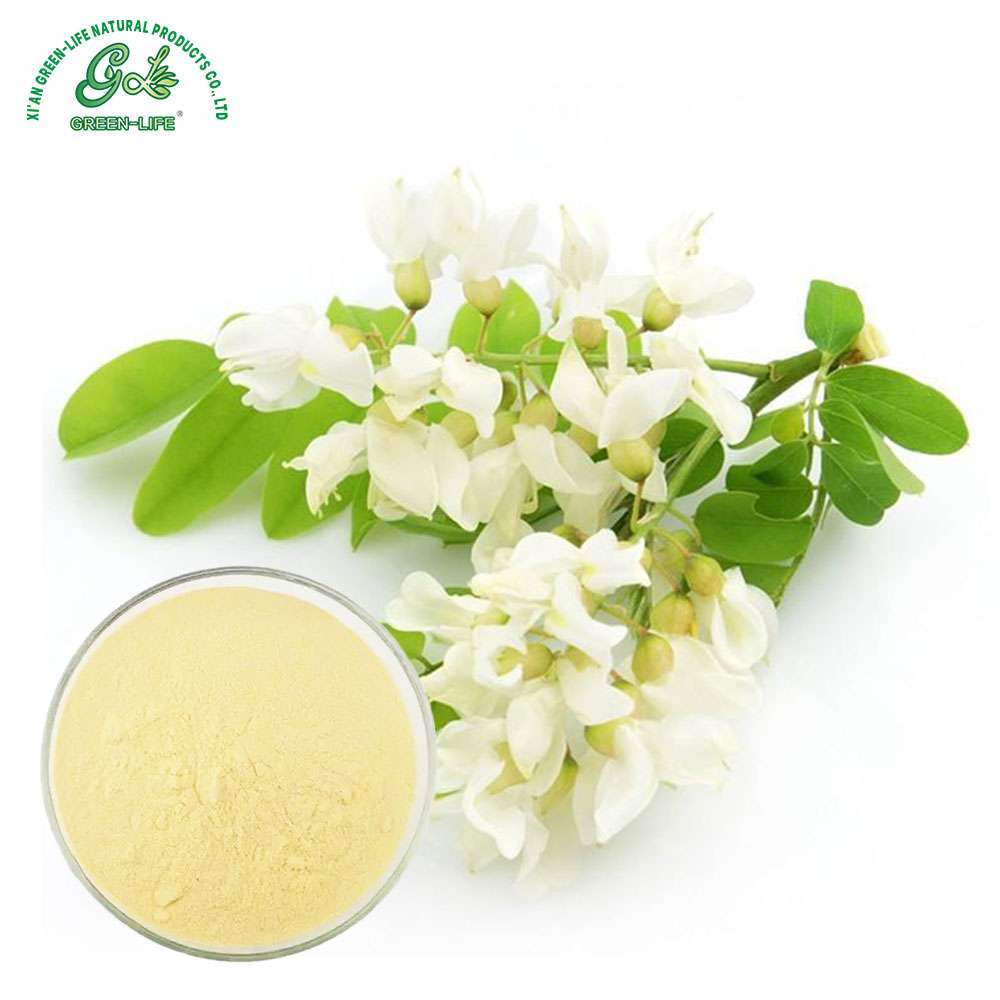
Quercetin Extract Powder is a high-purity flavonoid ingredient standardized to 95% quercetin, subject to the agreed analytical specification. It is intended for B2B customers developing dietary supplements, functional-food products, beverage powders, and specialized nutrition formulas.
Quercetin is a naturally occurring flavonol found in many plant foods. For commercial use, sourcing, assay basis, contaminant control, particle-size distribution, and formulation compatibility are more important than broad consumer-health claims. GL Herb supports customers with batch-specific documentation and technical discussion for the selected grade.
Product name: Quercetin Extract Powder
Active constituent: Quercetin
Specification: 95% quercetin
CAS No.: 117-39-5
Molecular formula: C15H10O7
Molecular weight: 302.24
Appearance: Yellow to yellow-green fine powder
Intended use: Ingredient for further manufacturing only
Technical Specification
| Item | Typical Requirement |
|---|---|
| Product name | Quercetin Extract Powder |
| Active constituent | Quercetin |
| Assay | 95.0% minimum, subject to agreed assay basis |
| Test method | HPLC; final method and reference standard stated on COA |
| Botanical source | To be stated accurately on the final specification |
| Plant part used | To be stated accurately on the final specification |
| Appearance | Yellow to yellow-green fine powder |
| Identification | Conforms to quercetin reference standard |
| Loss on drying | Confirm against current product specification |
| Residue on ignition | Confirm against current product specification |
| Heavy metals | Confirm against destination-market requirements |
| Pesticide residues | Confirm against destination-market requirements |
| Residual solvents | Confirm according to extraction process and applicable standards |
| Microbiological limits | Confirm against current batch specification |
| Particle size | Standard or customized option, subject to feasibility |
| Packaging | Food-grade inner liner and sealed outer drum/carton |
| Shelf life | 24 months when unopened and stored as recommended |
Formulation Considerations
Quercetin has limited aqueous solubility. Therefore, a 95% standard powder should not automatically be assumed suitable for a clear beverage or for high systemic-exposure positioning.
In a human pharmacokinetic study, researchers compared unformulated quercetin with a lecithin-based quercetin phytosome delivery system. The improved formulation showed higher solubility and oral exposure than standard quercetin. This does not mean that standard quercetin is ineffective; it means that delivery format materially affects product development and should be evaluated before commercial launch. Human bioavailability study, 2018
Evidence and Responsible Positioning
Quercetin has substantial preclinical literature concerning antioxidant activity and cell-signaling pathways. However, laboratory findings should not be translated directly into claims that a finished product treats inflammation, cancer, allergies, cardiovascular disease, or infection.
A 2023 umbrella review led by researchers from multiple academic institutions assessed five meta-analyses of randomized controlled trials, encompassing 18 eligible trials plus five additional trials. It found a small average reduction in systolic blood pressure and insulin levels, but no consistent effects on diastolic blood pressure, lipids, inflammation, body measurements, fasting glucose, or insulin resistance. The authors rated the certainty of evidence from very low to moderate and called for stronger long-term trials. Arabi et al., Phytotherapy Research, 2023
A 2020 systematic review and meta-analysis of 17 randomized trials involving 896 participants reported modest average changes in blood pressure, while lipid profiles and glucose concentrations did not change significantly overall. Sahebkar et al., Nutrition Reviews, 2020
A separate 2022 systematic review of flavonoid interventions for allergic conditions included 15 randomized trials and 990 participants. It found that some flavonoid interventions showed benefits, but the evidence was low to moderate quality and not all studies were quercetin-only products. It should therefore not be used as support for an “allergy relief” claim for this ingredient. Brasiel et al., Journal of Immunology Research, 2022
Safety and Regulatory Considerations
Quercetin is a dietary-supplement ingredient, not a medicine. Finished-product manufacturers are responsible for confirming the legal status, permitted claims, dosage, label requirements, and safety assessment in each destination market.
The U.S. National Institutes of Health Office of Dietary Supplements notes that clinical trials using up to 1,000 mg/day for up to 12 weeks reported no serious adverse effects, while evidence remains limited for many populations and long-term high-dose use. NIH Office of Dietary Supplements
Customers should obtain professional review before marketing to pregnant or breastfeeding people, children, people with kidney disease, or consumers taking prescription medications. Memorial Sloan Kettering Cancer Center also advises consumers to disclose supplement use to healthcare providers because herb–drug interactions may be relevant. Memorial Sloan Kettering: Quercetin
Learn more about quercetin on WebMD or Healthline.
Applications of Quercetin Extract Powder:
Dietary Supplements:
Quercetin Extract Powder is commonly used in the formulation of dietary supplements aimed at boosting immunity, reducing inflammation, and promoting overall health.
Functional Foods & Beverages:
It is added to functional foods, such as energy drinks, smoothies, or health bars, to enhance antioxidant content and support immune and cardiovascular health.
Cosmetics & Skincare Products:
Due to its antioxidant and anti-inflammatory properties, quercetin is used in skincare formulations to help reduce skin aging, soothe irritation, and protect against UV damage.
Sports Nutrition:
Quercetin is sometimes included in sports supplements to improve endurance, reduce muscle soreness, and accelerate recovery after exercise due to its anti-inflammatory and antioxidant effects.
Natural Allergy Relief:
As a natural antihistamine, quercetin is often used in products targeting seasonal allergies, nasal congestion, and other allergic conditions.
See our Resveratrol Extract Powder or Plant Extracts Overview for more antioxidant products.
Quality Documentation Available on Request
Subject to the selected grade, purchase stage, and applicable confidentiality terms, the following may be available:
- Certificate of Analysis
- HPLC chromatogram or assay report
- Product specification sheet
- SDS
- Microbiological test report
- Heavy-metal test report
- Pesticide-residue test report
- Residual-solvent test report, where applicable
- Allergen statement
- GMO statement
- TSE/BSE statement
- Packaging and storage information
- Stability data, where available
- Manufacturing and certification documentation relevant to qualification
Frequently Asked Questions
1. Is the product 95% quercetin or 95% quercetin extract?
The specification should clearly state the assay basis as “quercetin, not less than 95.0% by HPLC” if that is confirmed by the approved COA. Buyers should not accept an ambiguous “95% extract” statement.
2. What botanical source is used for the quercetin?
The botanical source and plant part must be confirmed in the final specification and COA. This information should be disclosed before purchase because botanical origin affects traceability, regulatory documentation, and contaminant-risk assessment.
3. What test method is used?
HPLC is the preferred buyer-facing method for quercetin assay. The final COA should identify the analytical method, reference standard, assay basis, and result for each batch.
4. Is standard quercetin powder water soluble?
Standard high-purity quercetin has limited water solubility. It is generally better suited to capsules, tablets, and dry blends. Beverage applications require formulation and stability testing.
5. Can this ingredient be marketed for allergy relief or immune support?
Claims depend on the finished product and the laws of the destination market. The raw-material page should not claim to treat allergies, asthma, infections, or immune conditions. Regulatory review is required before using consumer-facing claims.
6. Which quality documents can be supplied?
Depending on the grade and commercial stage, documents may include COA, HPLC assay report, microbiology, heavy metals, pesticide residues, residual solvents, SDS, allergen statement, and GMO statement.
7. How do I assess batch-to-batch consistency?
Request at least three recent COAs, compare assay method and assay basis, review contaminant limits, verify botanical traceability, and confirm that the supplier’s specification matches your destination-market requirements.
8. What should I provide when requesting a sample?
Please provide your intended dosage form, target market, preferred particle size, required assay, desired sample quantity, and required documentation. This helps ensure that the sample is representative of the grade suitable for your project.