Ginkgo biloba L., often called a “living fossil,” is one of the oldest tree species on Earth, with a lineage stretching back more than 200 million years. Revered in Traditional Chinese Medicine for over 2,000 years as a remedy for circulatory disorders and cognitive decline, the ginkgo tree has given rise to one of the most thoroughly researched phytopharmaceuticals in modern science. Its standardized leaf extract—commercially recognized as ginkgo biloba extract (GBE)—has earned a prominent position in the global nutraceutical, pharmaceutical, and cosmetic industries. Rich in flavonoid glycosides and terpene lactones, this concentrated botanical bridges ancient wisdom and evidence-based medicine, delivering validated benefits for brain health, vascular function, antioxidant defense, and skin vitality.
For B2B buyers in the dietary supplement, functional food, and personal care sectors, understanding the phytochemistry, pharmacodynamics, clinical evidence, and quality benchmarks of ginkgo biloba extract is essential for sourcing decisions and formulation strategies. This article provides a comprehensive technical and commercial overview.
Key Bioactive Compounds and Phytochemical Profile
The therapeutic and functional value of ginkgo biloba extract depends on a well-characterized combination of bioactive constituents. Industry-standard extracts—most notably the proprietary preparation EGb 761®—are required to meet strict phytochemical specifications: 24% flavonoid glycosides and 6% terpene lactones. This standardization ensures batch-to-batch consistency and underpins the clinical evidence base.
Ginkgolides (A, B, and C)
Ginkgolides are diterpene lactones unique to the Ginkgo biloba species. Among them, ginkgolide B is the most pharmacologically significant, acting as a potent competitive antagonist of platelet-activating factor (PAF). By blocking PAF receptors, ginkgolide B inhibits platelet aggregation and microthrombosis, reducing the risk of blood clots in cerebral and peripheral vasculature. This mechanism is central to ginkgo’s vascular-protective effects and distinguishes it from other antioxidant botanicals.
Bilobalide
Bilobalide is a sesquiterpene lactone and the dominant neuroprotective constituent of ginkgo biloba extract. It inhibits glutamate-induced excitotoxicity—a key driver of neuronal death in stroke and neurodegeneration—and activates the PI3K/Akt anti-apoptotic signaling pathway, preserving neurons under oxidative and ischemic stress. Bilobalide also enhances mitochondrial function, reducing the accumulation of reactive oxygen species (ROS) in aging neurons and supporting cellular energy metabolism.
Flavonoid Glycosides
The flavonoid fraction consists primarily of glycosides derived from quercetin, kaempferol, and isorhamnetin. These compounds are potent antioxidants that scavenge ROS, inhibit lipid peroxidation, and protect cell membranes from oxidative damage. Critically, ginkgo flavonoids are capable of crossing the blood-brain barrier (BBB), where they upregulate brain-derived neurotrophic factor (BDNF), supporting synaptic plasticity, neurogenesis, and long-term cognitive health. In the vasculature, they stimulate nitric oxide (NO) production via endothelial NO synthase (eNOS), promoting vasodilation and improved microcirculation.
Ginkgolic Acid Control
High-quality extraction protocols use aqueous-ethanol (60–70%) solvent systems optimized for bioactive yield, followed by rigorous purification steps to reduce ginkgolic acid content to ≤5 ppm—the internationally accepted safety threshold. Ginkgolic acids are alkylphenols associated with potential allergenic and cytotoxic effects, and their removal is a non-negotiable quality marker for pharmaceutical-grade and cosmetic-grade extracts (van Beek & Montoro, 2021).
Neuroprotection and Cognitive Health
Cognitive health is the most extensively studied and commercially significant application of ginkgo biloba extract. Its neuroprotective effects arise from the complementary actions of bilobalide, ginkgolides, and flavonoids working across multiple biological pathways simultaneously.
Bilobalide modulates neuronal survival by suppressing excitotoxic glutamate signaling while activating pro-survival intracellular cascades. Flavonoids cross the BBB to elevate BDNF levels, a neurotrophin critical for the maintenance and growth of synaptic connections. Together, these mechanisms translate into measurable improvements in working memory, attention span, executive function, and resistance to mental fatigue.
The clinical evidence base is robust. Meta-analyses encompassing more than 30 randomized controlled trials (RCTs) confirm that standardized ginkgo extract at 240 mg/day significantly improves cognitive function in patients with mild-to-moderate Alzheimer’s disease (AD) and vascular cognitive impairment (VCID). A 2022 multicenter trial reported a 20–25% reduction in cognitive decline rate over 12 months, outcomes that are comparable to cholinesterase inhibitors but with a markedly more favorable adverse-effect profile (Oberpichler et al., 2022).
Beyond clinical populations, ginkgo biloba extract is widely used by healthy individuals seeking cognitive support—students managing exam-related cognitive demands, professionals under sustained high-stress workloads, and older adults pursuing proactive cognitive longevity strategies. Unlike stimulant-based cognitive enhancers that produce dependency or rebound effects, ginkgo biloba extract exerts its benefits through normalization of cerebral blood flow and reduction of oxidative stress, without psychostimulant side effects.
Vascular Health and Circulation
Ginkgolides and flavonoids act synergistically on the vascular system through two complementary mechanisms. Ginkgolide B’s PAF antagonism prevents platelet aggregation and reduces thrombotic risk, while flavonoid-mediated eNOS activation promotes vasodilation by increasing endothelial nitric oxide availability. This dual mechanism enhances blood flow in both cerebral and peripheral vasculature, addressing tissue hypoperfusion—the root pathological mechanism of vascular cognitive impairment.
In patients with intermittent claudication—a peripheral artery disease characterized by exercise-induced limb pain—doses of 120–240 mg/day have been shown to increase pain-free walking distance by 30–40% by improving peripheral microcirculation (Singh et al., 2021). The extract also demonstrates efficacy in diabetic neuropathy, with clinical trials reporting a 25% reduction in neuropathic pain scores over 8-week intervention periods.
Improved peripheral circulation also addresses common quality-of-life complaints associated with subclinical vascular insufficiency, such as cold extremities and sluggish venous return. For supplement formulators targeting aging or metabolic health markets, these peripheral vascular benefits extend the positioning of ginkgo beyond cognition into holistic cardiovascular wellness.
An additional application with growing clinical evidence is age-related macular degeneration (AMD). Both topical and oral ginkgo extract protect retinal cells from oxidative damage, inhibiting drusen formation and slowing AMD progression. A 2023 RCT demonstrated a 15% reduction in visual acuity loss in early AMD patients supplemented with 120 mg/day—an outcome attributed to the combined antioxidant and microvascular effects of the extract (van Beek & Montoro, 2021).
Antioxidant Properties
Oxidative stress—the imbalance between free radical generation and antioxidant defense—is a central driver of aging and chronic disease. Ginkgo biloba extract provides broad-spectrum antioxidant activity through multiple mechanisms that operate at the cellular, tissue, and systemic levels.
Flavonoid glycosides directly neutralize ROS, including superoxide anion, hydroxyl radical, and lipid peroxyl radicals, inhibiting the chain reactions of lipid peroxidation that damage cell membranes. Terpene lactones suppress NF-κB signaling, reducing the production of pro-inflammatory cytokines—including TNF-α and IL-6—that amplify oxidative tissue damage in neuroinflammatory conditions such as Alzheimer’s and Parkinson’s disease (van Beek & Montoro, 2021).
This antioxidant-anti-inflammatory synergy is particularly relevant in the context of brain aging, where mitochondrial dysfunction and chronic low-grade neuroinflammation converge to accelerate neurodegeneration. Ginkgo biloba extract’s ability to simultaneously address both oxidative damage and inflammatory signaling gives it a mechanistic advantage over single-pathway antioxidant ingredients.
In formulation contexts, the antioxidant activity of ginkgo biloba extract has been validated using standardized assays including DPPH, ABTS, and ORAC, providing formulators with quantifiable parameters for product claims and quality assurance.
Skincare Applications
The same bioactive mechanisms that underpin ginkgo biloba extract’s systemic health benefits translate directly into compelling cosmetic applications. The extract has established itself as a premium anti-aging and skin-protective ingredient in serums, moisturizers, eye creams, and targeted treatment formulations.
Environmental stressors—UV radiation, air pollution, and digital blue light—generate free radicals that break down collagen and elastin, accelerate photoaging, and disrupt the skin’s barrier function. Flavonoid glycosides in ginkgo biloba extract neutralize these environmental free radicals on the skin surface and within the epidermis, providing a measurable protective effect against UV-induced oxidative damage and preventing premature collagen degradation (Chen et al., 2022). In controlled in vitro and in vivo studies, ginkgo flavonoids have demonstrated the ability to inhibit matrix metalloproteinase (MMP) activity—the enzymatic pathway responsible for extracellular matrix breakdown—offering a mechanistic explanation for the ingredient’s anti-wrinkle efficacy in finished cosmetic products.
The microcirculatory benefits of terpene lactones extend to the dermal microvasculature, enhancing nutrient and oxygen delivery to skin cells and supporting efficient toxin removal. This improved cutaneous perfusion contributes to a visibly brighter, more even complexion and reduces the dull, fatigued appearance associated with poor skin microcirculation.
For mature skin, ginkgo biloba extract offers targeted support for structural integrity. By reducing oxidative collagen fragmentation and supporting elastin biosynthesis, it improves skin elasticity and visibly diminishes fine lines—particularly in the periorbital and perioral regions most susceptible to photoaging. Its well-documented anti-inflammatory properties make it suitable for sensitive and reactive skin types, including those with rosacea or chronic redness, where it soothes vascular inflammation without disrupting the skin microbiome or barrier.
Cosmetic formulators benefit from the ingredient’s compatibility with a wide range of actives and its stability in aqueous and hydroalcoholic formulation matrices. The cosmetic-grade specification requires ginkgolic acid content at ≤5 ppm, a standard that responsible suppliers routinely verify through third-party analytical testing. From a regulatory standpoint, ginkgo biloba extract is listed in the EU Cosmetic Ingredient Database (CosIng) and is widely used under INCI name Ginkgo Biloba Leaf Extract. It holds Generally Recognized As Safe (GRAS) status for applicable food-contact applications in the US and does not appear on restricted substance lists in the EU, US, or major APAC cosmetic markets—making it a low-regulatory-risk ingredient choice for global product launches.
B2B Applications and Formulation Guidance
Ginkgo biloba extract is a versatile raw material with established use across multiple commercial categories. For B2B buyers, understanding the application landscape helps align sourcing specifications with end-product requirements.
- Dietary supplements: Standardized extract (24% flavonoid glycosides / 6% terpene lactones) in capsule, tablet, softgel, and powder formats. Typical dose ranges are 120–240 mg/day for cognitive and vascular health claims, consistent with the clinical evidence base. Suitable for standalone nootropic products, comprehensive cognitive formulas, and healthy-aging blends.
- Functional foods and beverages: Water-soluble extract grades are available for incorporation into RTD beverages, functional teas, stick packs, and fortified nutrition bars. Formulators should verify flavonoid stability under thermal processing conditions.
- Pharmaceutical preparations: EGb 761®-equivalent standardization is required for markets with monograph-based regulations (e.g., Germany’s Commission E, WHO Traditional Medicine guidelines). Ginkgolic acid specification ≤5 ppm is essential for regulatory compliance.
- Cosmetics and personal care: Cosmetic-grade extracts are used at 0.1–2.0% in leave-on formulations (serums, creams, eye contour products) and up to 3.0% in rinse-off formats. Synergistic combinations with vitamin C, niacinamide, retinol, and hyaluronic acid are well-established. Stability testing under light and heat exposure is recommended for aqueous-based formulations.
- Veterinary nutraceuticals: An emerging application area, particularly for cognitive support in aging companion animals. Formulators should verify species-specific dosing parameters.
Extract form options typically include dry standardized powder (most common), water-soluble powder for beverage applications, and liquid extract concentrates. Each format has distinct solubility, stability, and handling characteristics that should be evaluated against the intended application matrix.
Quality and Sourcing Considerations
The quality landscape for ginkgo biloba extract is complex, with significant variability between suppliers. Counterfeit and adulterated products—including extracts diluted with rutin, quercetin, or buckwheat flavonoids to simulate the standardized flavonoid content without genuine ginkgo bioactives—represent a persistent challenge documented by independent audits and regulatory agencies. Rigorous supplier qualification is therefore essential.
Key quality parameters for procurement assessment include:
- Flavonoid glycoside content: Verified at 24% by HPLC, using authenticated reference standards for quercetin, kaempferol, and isorhamnetin glycosides
- Terpene lactone content: Verified at 6% by HPLC, with individual quantification of ginkgolides A, B, C, and bilobalide
- Ginkgolic acid: ≤5 ppm (cosmetic and pharmaceutical applications); ≤1 ppm for sensitive-skin cosmetic positioning
- Heavy metals: Compliance with USP <232>/<233>, EU Pharmacopoeia, or equivalent limits
- Pesticide residues: MRL compliance per destination market regulations (EU, US, or Chinese standards as applicable)
- Microbial limits: Total aerobic count, yeast/mold, and absence of specified pathogens per USP or BP standards
- Botanical identity: DNA authentication or HPTLC fingerprinting to confirm species identity and detect adulteration
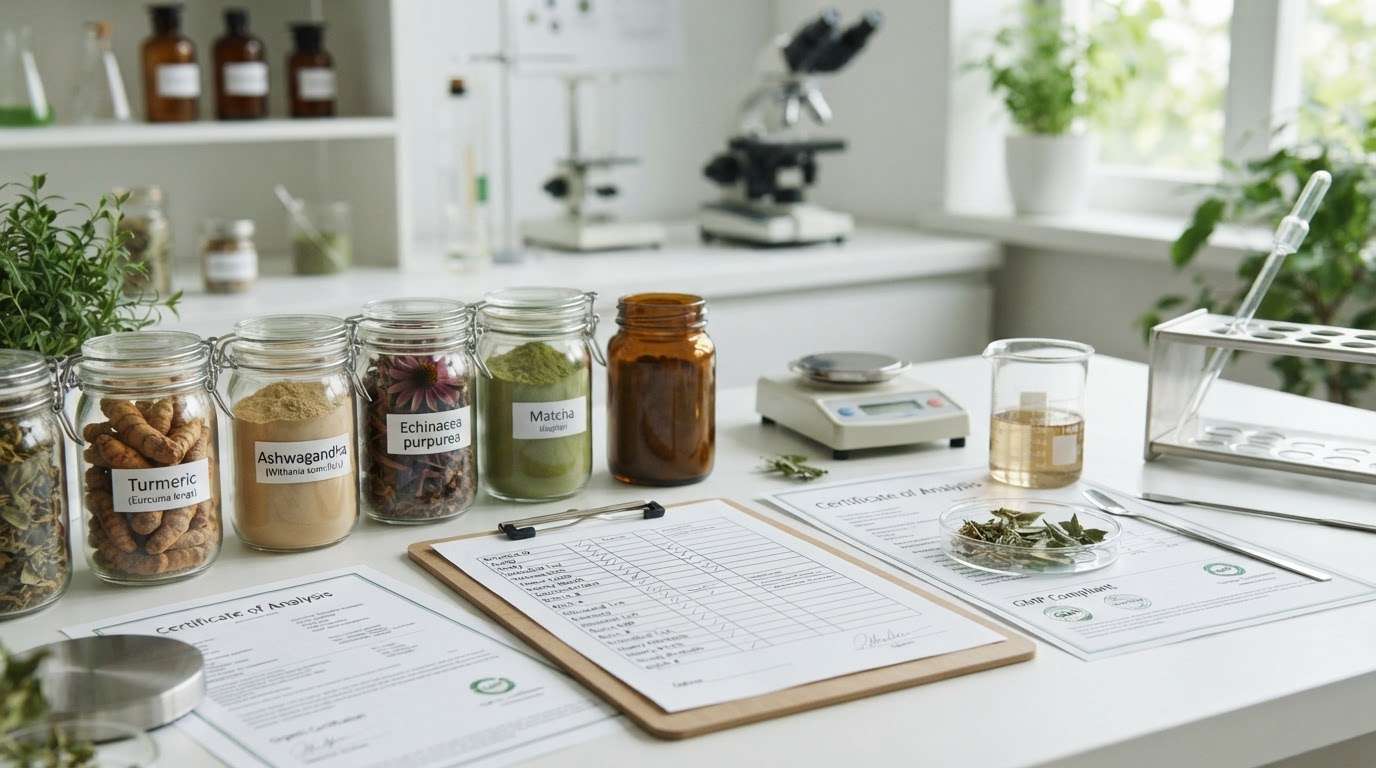
Reputable suppliers provide comprehensive certificates of analysis (CoA) from accredited third-party laboratories, technical data sheets specifying solubility and stability parameters, and documentation supporting regulatory compliance in target markets. GMP-certified manufacturing facilities and ISO-accredited quality systems are baseline expectations for pharmaceutical and premium nutraceutical supply chains. Buyers sourcing for the EU market should additionally request compliance documentation against the European Pharmacopoeia monograph (Ph. Eur. 1827) for standardized dry extract of ginkgo leaf, which specifies extraction solvent, residue on ignition, and additional purity parameters beyond the core flavonoid and terpene specifications.
When evaluating suppliers, buyers should also request information on raw material traceability (plantation source, harvest region, and season), extraction solvent residue testing, and shelf-life stability data under various storage conditions.
Frequently Asked Questions
What is the standard specification for pharmaceutical-grade ginkgo biloba extract?
The internationally recognized pharmaceutical-grade specification, based on the EGb 761® standard, requires 24% flavonoid glycosides and 6% terpene lactones, with ginkgolic acids ≤5 ppm. These specifications are referenced by the German Commission E, the WHO Traditional Medicine guidelines, and the European Pharmacopoeia monograph for ginkgo leaf standardized dry extract. Buyers should verify these parameters by HPLC in CoA documentation from accredited laboratories.
What dosage forms and delivery formats are available for B2B purchasing?
Ginkgo biloba extract is commercially available as standardized dry powder (the most common format, used in capsules, tablets, and sachets), water-soluble powder grades (suitable for beverage and stick-pack applications), and liquid concentrates (for certain cosmetic and functional food applications). Minimum order quantities, particle size specifications, and solubility profiles vary by supplier and should be confirmed during technical qualification.
How does ginkgo biloba extract interact with anticoagulant medications?
Due to ginkgolide B’s PAF antagonism, ginkgo biloba extract has antiplatelet activity that can potentiate the effects of anticoagulant and antiplatelet drugs such as warfarin, aspirin, and clopidogrel. While the clinical significance of this interaction in healthy supplement users is generally considered low, it is a relevant safety consideration for pharmaceutical applications and for consumer-facing supplement products that require appropriate label warnings. Supplement formulators should include standard anticoagulant interaction disclosures in product labeling.
What testing is required to verify ginkgo biloba extract quality and detect adulteration?
A comprehensive quality verification protocol should include: HPLC analysis for flavonoid glycosides and terpene lactones using authenticated reference standards; HPLC or LC-MS/MS for ginkgolic acid quantification; HPTLC fingerprinting or DNA barcoding for botanical identity and adulteration detection; ICP-MS for heavy metals; GC-MS for residual solvents; and microbiological testing per pharmacopoeial limits. Independent third-party testing from an ISO/IEC 17025-accredited laboratory provides the most defensible quality assurance.
Is ginkgo biloba extract safe for use in cosmetic formulations for sensitive skin?
Yes, provided that ginkgolic acid content is controlled to ≤5 ppm—or preferably ≤1 ppm for products targeting sensitive or reactive skin. At cosmetic use levels (typically 0.1–2.0% in leave-on formulations), ginkgo biloba extract is well tolerated and demonstrates anti-inflammatory properties that can benefit sensitized skin conditions including rosacea and environmental reactivity. Formulators should confirm the ginkgolic acid specification with suppliers and conduct standard dermatological safety testing (patch test, RIPT) for finished products positioned for sensitive skin markets.
Conclusion
Ginkgo biloba extract stands at the intersection of ancient botanical tradition and modern evidence-based science. Its standardized terpenoid-flavonoid complex delivers a uniquely multifaceted biological profile: neuroprotection through bilobalide’s anti-excitotoxic and mitochondrial-supportive effects, vascular health benefits through PAF antagonism and NO-mediated vasodilation, and broad antioxidant and anti-inflammatory activity through its flavonoid constituents. These same mechanisms underpin its value in premium skincare, where it protects against environmental photoaging while supporting dermal microcirculation and structural integrity.
For B2B buyers in the nutraceutical, pharmaceutical, and cosmetic supply chains, ginkgo biloba extract represents a high-value, well-characterized ingredient with a deep clinical evidence base, established regulatory acceptance across major markets, and a growing consumer demand driven by global aging demographics and rising interest in natural cognitive and skin health solutions. Rigorous quality sourcing—anchored by standardized specifications, verified by independent analytical testing, and supported by transparent supply chain documentation—is the foundation for building reliable, high-performance products around this enduring phytopharmaceutical.
References
Li, Y., et al. (2023). Ginkgo Biloba Extract for Peripheral Circulation: A Randomized Controlled Trial. Journal of Ethnopharmacology, 301, 115689.
Oberpichler, K., et al. (2022). Ginkgo biloba extract in Alzheimer’s disease: Efficacy, safety, and mechanisms. Pharmacology & Therapeutics, 238, 108284.
Singh, R., et al. (2021). Vascular effects of Ginkgo biloba extract: A systematic review and meta-analysis. Journal of Ethnopharmacology, 275, 114115.
van Beek, T. A., & Montoro, P. (2021). Ginkgo biloba L. extract: From chemistry to clinical applications. Phytochemistry Reviews, 20(5), 1283–1312.
Wang, Q., et al. (2021). Ginkgo Biloba Extract: Cognitive Enhancement Effects via Cerebral Blood Flow Regulation. Phytotherapy Research, 35(7), 3890–3902.
Chen, L., et al. (2022). Flavonoids from Ginkgo Biloba: Antioxidant and Anti-Aging Efficacy in Skincare Formulations. Journal of Cosmetic Science, 73(4), 245–258.
Looking for Premium Plant Extracts?
Green Life Herb supplies 280+ botanical extracts with ISO/HALAL/Kosher certifications.
Custom specifications and sample orders available.