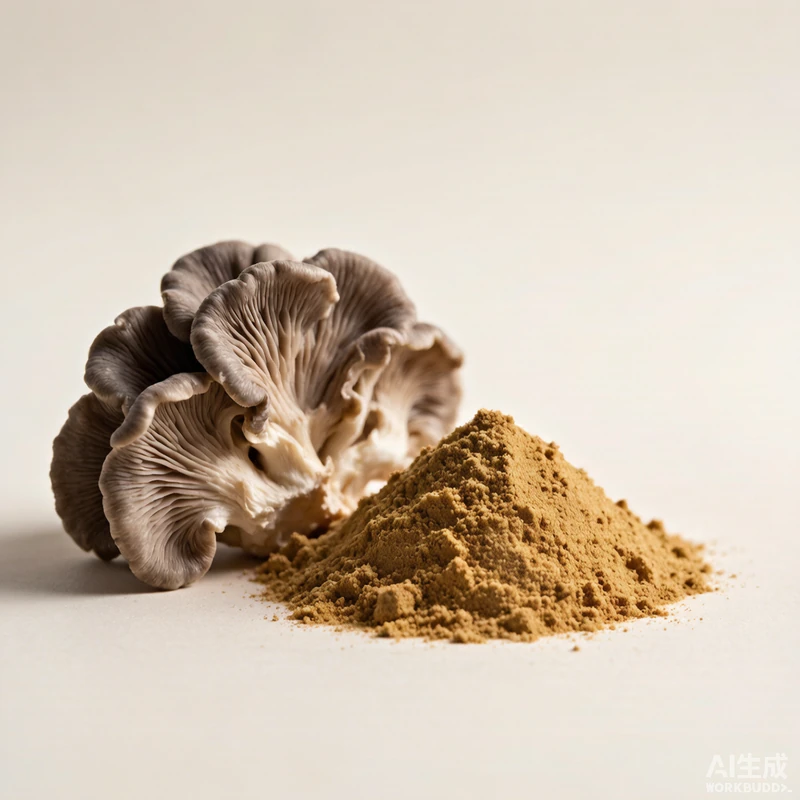
For centuries, the maitake mushroom (Grifola frondosa) was prized in Japan and China as both a culinary delicacy and a health tonic. Today, modern research is catching up to that tradition. Across labs and small human trials, maitake keeps showing up in two places that matter most to formulators and wellness brands: metabolic health and immune resilience.
This guide walks through what the science actually says — and what it doesn’t — about maitake extract for blood sugar and immunity, how it compares to other medicinal mushrooms, how to use it, and what to look for when sourcing a quality extract.
Quick disclaimer: This article is for educational and sourcing purposes only. It is not medical advice, and maitake extract is not intended to diagnose, treat, cure, or prevent any disease. Always consult a qualified healthcare professional before starting any supplement, especially if you take medication or have a health condition.
1. What Is Maitake Extract?
Maitake — sometimes called “hen of the woods” or the “dancing mushroom” (because finders reportedly danced with joy) — is a polypore mushroom that grows at the base of oak, elm, and maple trees across Japan, China, and North America. As a medicinal mushroom, it has a long history in Asian food-medicine practice as a general tonic for vitality and defense.
What makes it interesting to science is its nutritional profile:
- Beta-glucans — immune-modulating polysaccharides
- Vitamin D (as ergosterol precursor) and B vitamins
- Minerals such as potassium, magnesium, zinc, and selenium
- Antioxidants including polyphenols and flavonoids
When we talk about maitake extract, we usually mean a concentrated form — hot-water, dual, or standardized extract — where the active polysaccharides are boosted well above what you’d get from the whole food. That concentration is what makes the research (and the dosing) meaningful.
2. Maitake and Blood Sugar: What the Research Shows
Blood sugar balance is the single most-studied benefit of maitake, and it’s the reason many metabolic-formula brands reach for it. The mechanisms researchers point to are refreshingly concrete:
- Improved insulin sensitivity — specific glycoproteins in maitake (notably the SX-fraction) appear to help cells respond better to insulin.
- Slower glucose absorption — compounds in maitake may inhibit carbohydrate-digesting enzymes such as alpha-glucosidase, easing the post-meal blood-sugar spike.
- Better glucose handling — several animal studies and small human trials report improved fasting and postprandial glucose.
A systematic review published in 2024 summarizes maitake’s anti-diabetic and immunomodulatory effects across the literature, while an earlier SX-fraction study explored its hypoglycemic potential in type 2 diabetes. Animal work on glucose tolerance dates back to studies such as Kubo et al., 2006.
The honest caveat: most of the strongest signals come from animal models and small pilot trials. Larger, longer human studies are still needed. Maitake is best understood as a supportive ingredient alongside diet and medical care — not a replacement for diabetes medication.
Formulator’s note: If you’re building a blood-sugar-focused formula, maitake pairs naturally with other botanicals we cover, such as bitter melon extract and chlorogenic acid, both of which target glucose metabolism from complementary angles.
3. How Maitake Supports Immune Function
If blood sugar is maitake’s headline, immunity is its foundation. The star compounds here are again the beta-glucans — particularly the D-fraction, a purified polysaccharide-protein complex.
According to Memorial Sloan Kettering Cancer Center, maitake’s beta-glucans engage immune receptors and may stimulate natural killer (NK) cells and other immune pathways. Healthline’s overview notes that maitake compounds have been studied for their ability to activate immune cells and support the body’s defenses against pathogens, including certain viruses.
The proposed chain of action looks like this:
- Beta-glucans bind to receptors (e.g., Dectin-1) on macrophages and dendritic cells.
- That triggers cytokine signaling — the immune system’s communication network.
- NK cells and T-cells become more active, improving immune surveillance.
Maitake is also being studied as an adjunctive support in oncology care — meaning it’s explored for supporting immune function alongside conventional treatment, never as a substitute. Research on the D-fraction reflects the seriousness with which the scientific community treats this avenue.
Related reading: For other immune-oriented botanicals, see our astragalus extract, black garlic extract, and the science behind ivy extract for respiratory health and thyme as a natural antimicrobial.
4. The Science Inside: Beta-Glucans, D-Fraction & Bioactive Compounds
To talk about maitake is to talk about its polysaccharides. The key players:
| Compound | What it is | Why it matters |
| Beta-1,3/1,6-glucans | Structural polysaccharides | Primary immune-modulating agents |
| D-fraction / MD-fraction | Purified beta-glucan concentrates | Most clinically studied form |
| Ergosterol | Vitamin D₂ precursor | Adds nutritional value |
| Proteins & peptides | Bioactive fractions | Support immune regulation |
| Minerals | K, Mg, Zn, Se | Antioxidant and enzymatic support |
Standardization is the practical takeaway: a “30% beta-glucan” extract behaves very differently from whole mushroom powder. As EBSCO’s research summary notes, nearly all the rigorous human work has focused on these polysaccharide fractions, not the raw mushroom.
For buyers, that means one thing: ask for the standardization number. A reputable supplier will tell you the beta-glucan (or D-fraction) percentage, not just “maitake powder.”
5. Maitake for Metabolic & Heart Health
Beyond blood sugar, maitake shows promise in the broader metabolic picture:
- Cholesterol & lipids — animal studies suggest maitake may help lower LDL (“bad”) cholesterol and triglycerides while supporting HDL.
- Blood pressure — some animal research points to modest blood-pressure support.
- Weight management — by influencing how the body handles glucose and fat metabolism, maitake fits naturally into weight and metabolic formulas.
Healthline covers these cardiovascular angles, and the VA Whole Health Library discusses maitake among medicinal mushrooms used in integrative care.
The same caveat applies: human trial data here is limited, and effects are generally modest. Position maitake as part of a system, not a silver bullet.
Cross-link: Our beet extract article covers another botanically driven angle on blood pressure and stamina, and artichoke extract is a common metabolic-formula companion.
6. Maitake vs Other Medicinal Mushrooms
Shoppers and formulators often ask: which mushroom should I use? The honest answer is they’re not interchangeable. Here’s a quick comparison:
| Mushroom | Key compounds | Primary benefit area | Evidence |
| Maitake | Beta-glucans (D-fraction) | Immune + metabolic (blood sugar) | Moderate |
| Reishi | Triterpenes, beta-glucans | Stress, immune modulation | Well-studied |
| Shiitake | Lentinan | Heart health, immunity | Strong |
| Lion’s Mane | Hericenones, erinacines | Brain & nerve health | Growing |
| Turkey Tail | PSK, PSP | Immune support (cancer care) | Strong |
For a brand targeting both blood sugar and immunity, maitake’s dual-action profile is its differentiator. For pure cognitive positioning, lion’s mane wins; for broad immune tradition, reishi and turkey tail lead. Choosing comes down to your product’s claim strategy.
Learn more about sourcing strategy in our B2B buyer’s guide to botanical ingredients.
7. How to Use Maitake Extract: Forms, Dosage & Practical Tips
Maitake is available in several forms, and the differences matter when you read a label:
- Whole powder (capsule/loose): 500–2,500 mg/day. Broad nutrient profile, lower potency.
- Standardized extract: 500–1,500 mg/day. Look for beta-glucan or D-fraction standardization.
- D-fraction liquid: used in many clinical immune studies; dosing is body-weight based and should be professionally guided.
- Powder for food/drink: 1–2 g per serving. Easy to add to smoothies, soups, or functional beverages.
Healthline’s “how to use” section and EBSCO’s dosing summary offer accessible overviews. Practical tips:
- Start low, go slow — assess tolerance before increasing.
- Take with meals — improves tolerance and, for some compounds, absorption.
- Check the label — fruiting-body source and third-party testing beat vague “mushroom blend” claims.
- Consistency beats intensity — effects build over weeks of regular use.
If you’re sourcing at scale, our guide on how to qualify a bulk botanical supplier walks through the quality questions every buyer should ask. Browse all Green Life Herb products.
8. Safety, Side Effects & Who Should Be Cautious
Maitake is generally well tolerated as both food and supplement. The most commonly reported effects are mild and digestive — occasional nausea, bloating, or loose stool at higher doses.
The more important safety notes are about interactions:
- Diabetes medication — maitake may lower blood sugar, so combining it could amplify the effect. Monitor closely.
- Blood pressure medication — similar additive-effect caution.
- Anticoagulants (e.g., warfarin) — one case report suggests caution; discuss with a prescriber.
- Immunosuppressants — maitake’s immune activity could theoretically work against these drugs.
- Pregnancy, breastfeeding, surgery — insufficient safety data; avoid or pause (stop ~2 weeks before surgery).
Healthline and EBSCO both summarize these precautions. When in doubt, a healthcare provider is the right call — especially for anyone managing a chronic condition.
9. Choosing a Quality Maitake Extract (B2B Buyer’s Checklist)
Because product quality varies dramatically between brands, here’s what a serious formulator should verify:
- Source clarity — fruiting body vs. mycelium-on-grain. Fruiting-body extracts typically deliver more of the target beta-glucan fractions.
- Standardization — insist on a stated beta-glucan or D-fraction percentage, with a Certificate of Analysis.
- Third-party testing — purity, heavy metals, microbials, and potency.
- Certifications — cGMP, ISO 9001, and relevant food-safety standards.
- Traceability — documented sourcing from cultivation to finished batch.
At Green Life Herb, these checks are built into how we operate — from planted-material bases to ISO 9001-controlled manufacturing. Our R&D capabilities and company profile detail the quality system behind every extract we ship.
10. Green Life Herb Maitake Extract: Specifications & Applications
Green Life Herb (Xi’an Green Life Natural Products Co., Ltd.) has specialized in plant extracts since 2006, supplying standardized botanical ingredients to the nutraceutical, food, and cosmetic industries across 30+ countries.
Our Maitake Extract is produced for formulators who need consistency and credible science:
- Botanical name: Grifola frondosa
- Forms: hot-water extract, dual extract, and standardized powders
- Standardization: beta-glucan / D-fraction specified per batch
- Applications: immune and metabolic dietary supplements, functional foods, and beverages
- Support: full documentation, third-party testing, and customization
Whether you’re developing a blood-sugar-management formula, an immune-season product, or a dual-action functional food, our team can help you specify the right extract. Contact Green Life Herb to request a sample or technical datasheet.
Frequently Asked Questions
What is maitake mushroom good for?
Research suggests maitake may support immune function and healthy blood sugar, and it provides antioxidants. It’s also valued as a culinary mushroom with an earthy, umami flavor.
Does maitake lower blood sugar?
Small human and animal studies suggest maitake may help support healthy blood glucose and insulin sensitivity. It is not a substitute for diabetes medication, and people on glucose-lowering drugs should monitor levels closely.
How much maitake extract should I take?
It depends on the form. Whole powder commonly runs 1–3 g/day; standardized extracts are often 250–1,500 mg/day. Always follow the product label and consult a healthcare provider.
Is maitake safe with diabetes medication?
Maitake may add to blood-sugar-lowering effects, so combining it with diabetes medication requires monitoring. Talk to your clinician before use.
Maitake vs reishi — which is better for immunity?
Both support immunity, but through different compound profiles. Reishi is the more traditional “stress and immune” mushroom; maitake adds a strong metabolic (blood-sugar) angle. They’re complementary, not competitors.
Can maitake really boost the immune system?
Maitake polysaccharides may enhance certain immune cell activity (like NK cells), according to lab and early human studies. “Boost” is an oversimplification — the effect is modulation and support, not a switch that’s flipped on.
References
- Memorial Sloan Kettering Cancer Center — Maitake Mushroom
- WebMD — Maitake Mushroom Health Benefits
- Healthline — Maitake Mushroom: Risks, Benefits, and More
- NCCIH / NIH — National Center for Complementary and Integrative Health
- EBSCO — Maitake’s Therapeutic Uses (Research Starters)
- VA Whole Health Library — Mycomedicinals (Mushrooms) for Cancer
- Camilleri et al. (2024) — Systematic review, PMC11068609
- Konno S. — Maitake SX-fraction, PubMed 11903406
- Type 2 diabetes immunocytic function, PubMed 26349512
- Alpha-glucosidase / trehalose, PubMed 12224646
- SX-fraction insulin sensitivity, PubMed 17671829
This content is for informational purposes only and does not constitute medical advice. Green Life Herb does not claim that maitake extract diagnoses, treats, cures, or prevents any disease. Product specifications are illustrative; confirm details with our technical team before formulation.
Looking for Premium Plant Extracts?
Green Life Herb supplies 280+ botanical extracts with ISO/HALAL/Kosher certifications.
Custom specifications and sample orders available.