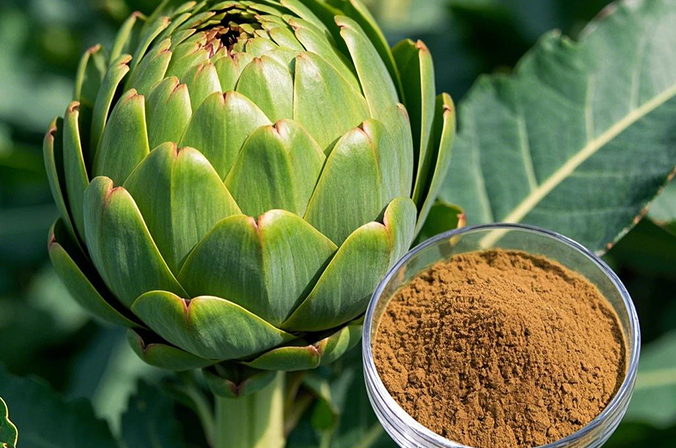
In hyperlipidemic patients, 8 weeks of supplementation reduces LDL cholesterol by 15–20% and triglycerides by 10–12% (Rigacci & Stefani, 2022). A landmark 6-month RCT (Wider et al., 2019) with 150 hyperlipidemic subjects confirmed 16.2% LDL reduction and 8.3% HDL improvement with 450 mg/day cynarin-standardized extract. A 2022 Cochrane review confirmed 300–600 mg/day effectively lowers lipids without known drug interactions (Thompson Coon et al., 2022).
Vascular Function and Blood Pressure
Beyond lipid modulation, artichoke extract supports vascular health through endothelial protection and vasorelaxation. Apigenin and chlorogenic acid contribute to these effects by modulating nitric oxide availability and reducing vascular inflammation. Clinical participants have shown improved endothelial function and modest blood pressure reduction with regular supplementation.
Antioxidant components—including caffeoylquinic acids and flavonoids—enhance the activity of liver-protective and vascular-protective enzymes while reducing oxidative biomarkers such as malondialdehyde (MDA), a key marker of lipid peroxidation and vascular damage.
Antioxidant and Anti-Inflammatory Properties
Artichoke extract’s antioxidant capacity is exceptional relative to other plant-derived ingredients. Its ORAC value surpasses kale by 43%, driven by the dense polyphenol matrix spanning cynarin, luteolin, chlorogenic acid, and various caffeic acid derivatives.
At the cellular level, the extract exhibits strong free-radical scavenging activity. Its polyphenols neutralize reactive oxygen species (ROS), reduce oxidative biomarkers, and upregulate endogenous antioxidant enzymes including SOD and catalase. Anti-inflammatory action is mediated primarily through luteolin’s inhibition of NF-κB signaling, which downregulates the transcription of pro-inflammatory mediators TNF-α, IL-6, and COX-2.
These combined antioxidant and anti-inflammatory properties have attracted interest beyond traditional liver and digestive applications. Artichoke extract is increasingly explored in anti-aging skincare formulations, where its ability to protect against oxidative stress-induced cellular damage, support collagen production, and reduce inflammatory skin responses provides a multi-mechanism approach to skin health.
B2B Applications: Functional Foods, Supplements, and OEM
Artichoke extract’s versatility across product categories—and its well-documented benefits backed by peer-reviewed clinical evidence—make it a high-value ingredient for B2B formulators across multiple industry segments. The global artichoke extract market is projected to reach $1.2 billion by 2027, driven by accelerating demand for plant-based hepatoprotectants and digestive health ingredients (Grand View Research, 2023).
Dietary Supplements
Artichoke extract is a cornerstone ingredient for supplement brands targeting liver health, digestive wellness, cholesterol management, and metabolic support. Standard finished-product formats include:
- Capsules and tablets: Typical dosages range from 300–640 mg of standardized extract per serving. Cynarin-standardized extracts (2.5–5% cynarin) are the clinical standard and deliver the most consistent efficacy profile.
- Softgels: Oil-based delivery systems can improve the bioavailability of lipophilic components including luteolin and apigenin.
- Powders and sachets: Water-dispersible artichoke extract powders enable clean-label formulations with predictable dissolution.
- High-potency practitioner lines: 500–1,000 mg doses targeting functional medicine practitioners and integrative health professionals managing NAFLD, hyperlipidemia, or metabolic syndrome.
Functional Beverages
The functional beverage market represents a rapidly expanding opportunity for artichoke extract. Its digestive and hepatoprotective benefits are well-suited to:
- Liver tonics and detox shots: Ready-to-drink formats leveraging artichoke’s bile-stimulating and hepatoprotective action.
- Detox teas: Artichoke extract pairs naturally with dandelion, milk thistle, and ginger in evening detox tea blends.
- Digestive health drinks: Pre-meal shots or functional waters targeting bloating, fat digestion, and GI comfort.
- Sports and metabolic wellness beverages: Blood sugar management and liver support are increasingly relevant to active consumers.
Water-soluble artichoke extract powders with optimized particle size distribution enable clear or slightly hazy beverage applications with acceptable bitterness profiles. Micro-encapsulation technology can further mask bitter notes for consumer-facing products requiring palatable taste.
Functional Foods and Nutraceutical Foods
Artichoke extract is increasingly incorporated into functional food formats including:
- Energy and wellness bars: Liver and digestive health positioning aligns well with clean-label snack formats.
- Digestive enzyme complexes: Pre-meal supplement blends that combine artichoke’s choleretic effects with digestive enzymes for synergistic fat digestion support.
- Anti-aging and wellness blends: Products combining artichoke’s antioxidant benefits with other botanical adaptogens for comprehensive cellular health.
Skincare and Cosmeceuticals
The antioxidant and anti-inflammatory properties of artichoke extract are gaining traction in the cosmeceutical sector. Its applications include anti-aging creams and serums, brightening formulations targeting oxidative stress-induced pigmentation, and protective skin care products where polyphenol-mediated cellular protection is a key claim.
OEM and Private Label
For OEM manufacturers and private label brands, artichoke extract offers strong market positioning due to its:
- Robust and growing evidence base supporting multiple product claims
- High consumer recognition driven by mainstream media coverage of liver health
- Established regulatory acceptance across major markets (EU, US, Canada)
- Flexible dosing and formulation options across multiple delivery systems
- Complementarity with other high-demand botanicals (milk thistle, dandelion, berberine)
Quality, Standardization, and Sourcing
For B2B buyers, sourcing decisions for artichoke extract should be guided by rigorous quality criteria. The gap between commodity artichoke powders and pharmaceutical-grade standardized extracts is significant—both in terms of bioactive content and clinical efficacy. Procurement teams should evaluate suppliers against the following benchmarks.
Standardization Levels
Clinical-grade artichoke extract is standardized for one or more of the following marker compounds:
- Cynarin: 1.5–5% (typical commercial range; 5% cynarin commands premium pricing and is used in high-potency formulations)
- Caffeoylquinic acids (total): 15–20% (a broader marker that captures the full spectrum of chlorogenic acid derivatives)
- Luteolin: ≥0.5% (ensures adequate anti-inflammatory bioactivity)
Aqueous-ethanol extraction (50–70% ethanol) is the industry standard for preserving the full polyphenol spectrum. Note that steaming during raw material processing preserves 94% of cynarin content versus only 55% in boiling—a consideration relevant to raw material sourcing and processing partner selection (Fernández-León et al., 2013).
Testing and Documentation Requirements
Quality-conscious buyers should require the following documentation from any artichoke extract supplier:
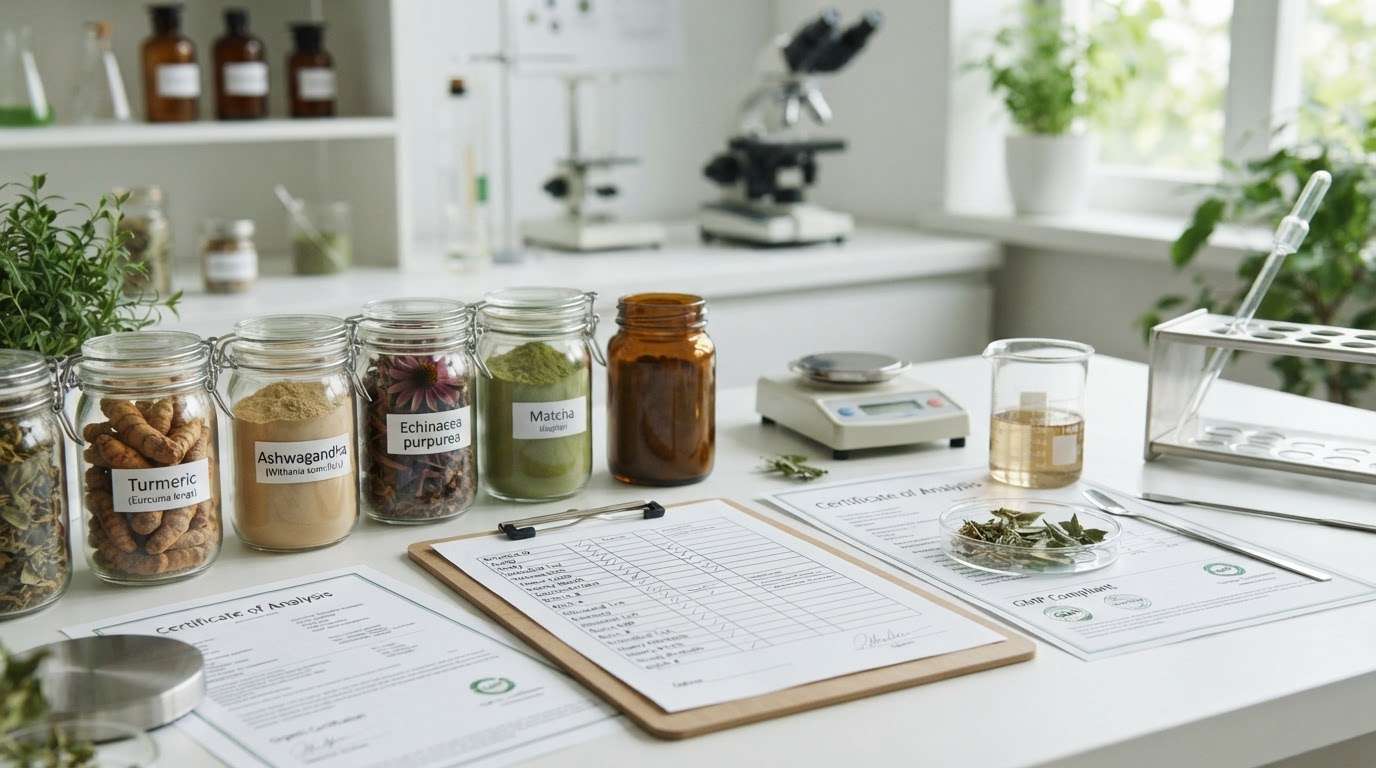
- Certificate of Analysis (COA) with HPLC-verified active compound content
- Heavy metals testing (Pb, Cd, As, Hg) meeting ICH Q3D or equivalent limits
- Pesticide residue screening per EU MRL or equivalent standards
- Botanical identity verification (macroscopic, microscopic, or DNA authentication)
- Microbiological testing (total plate count, yeast/mold, Salmonella, E. coli)
- Allergen declaration, GMO status, and BSE/TSE certificates
- Solvent residue testing for extraction solvent compliance
Regional Regulatory Compliance
Artichoke extract enjoys regulatory acceptance across all major supplement markets, though documentation requirements vary:
- United States: Generally Recognized as Safe (GRAS) status and established dietary supplement history under DSHEA; NDI notification may be required for novel extract specifications
- European Union: Listed under EU Novel Foods regulation as a traditional botanical; country-specific health claim regulations apply
- Canada: Licensed as a Natural Health Product (NHP) ingredient under Health Canada’s NHP Directorate
- China: Classified as a health food ingredient with defined permitted use categories
Origin and Supply Chain Considerations
European-sourced artichoke leaves—primarily from Spain, Italy, and France—traditionally command premium pricing due to established agricultural standards and proximity to the plant’s native growing regions. However, high-quality material is also available from North African and Asian origins with appropriate certification and third-party verification. Buyers targeting global distribution should ensure multi-region regulatory compliance documentation is available from their supplier.
At GL Herb, we supply standardized artichoke extract derived from high-quality Cynara scolymus leaves, processed to preserve the full spectrum of bioactive compounds. Our extract is non-GMO, gluten-free, and subject to comprehensive third-party safety testing, with flexible standardization options to suit diverse formulation requirements.
Safety Profile and Contraindications
Artichoke extract demonstrates an excellent tolerability profile across the clinical literature. Mild gastrointestinal upset—including transient nausea or loose stools associated with increased bile flow—is reported in fewer than 3% of users and typically resolves with dose adjustment or administration with food.
Key contraindications and precautions:
- Biliary obstruction: Artichoke extract stimulates bile flow and is contraindicated in patients with complete biliary obstruction, as increased bile secretion into a blocked duct could cause complications.
- Asteraceae (Compositae) allergy: Individuals with confirmed allergy to plants in this family (which includes ragweed, chrysanthemum, and daisy) should use caution.
- Antidiabetic medications: The extract’s modest hypoglycemic effect via AMPK activation warrants monitoring in patients on insulin or oral hypoglycemics.
- Pregnancy and lactation: Insufficient data exist to establish safety during pregnancy or breastfeeding; conservative guidance is to avoid use.
A 2022 Cochrane review confirmed 300–600 mg/day effectively lowers lipids without known drug interactions at standard doses (Thompson Coon et al., 2022). Long-term safety data at doses up to 1,000 mg/day are generally favorable, supporting use in chronic supplementation protocols.
Future Research Directions
The science underpinning artichoke extract continues to advance on several fronts relevant to B2B formulators:
- Nanoencapsulation: Research into lipid nanoparticles and cyclodextrin complexes aims to improve cynarin’s oral bioavailability, which is currently limited by first-pass metabolism.
- NASH clinical trials: Ongoing trials are evaluating artichoke extract’s efficacy in non-alcoholic steatohepatitis (NASH), the progressive form of NAFLD with limited pharmaceutical treatment options (Pinto et al., 2023).
- Combination therapies: Artichoke-silymarin combinations show enhanced NAFLD outcomes in preliminary data, suggesting synergistic hepatoprotection from dual-botanical liver formulations.
- Microbiome research: Emerging data on cynarin metabolites’ prebiotic effects on beneficial gut bacteria, particularly Akkermansia muciniphila, opens new positioning opportunities in the gut-metabolic health space (Zhang et al., 2023).
- Cognitive health: EU-approved clinical trials are investigating artichoke-phosphatidylserine complexes for potential applications in Alzheimer’s prevention via β-amyloid clearance mechanisms (NCT04828122).
Frequently Asked Questions
What is the standard dose of artichoke extract for supplement formulations?
Clinical trials have established effective dosing at 300–1,000 mg/day of standardized artichoke extract. For general liver health and digestive support products, 300–600 mg per serving (one to two capsules) is the most common commercial format. High-potency formulations for NAFLD or hyperlipidemia protocols may use 600–1,000 mg/day. Standardization to 2.5–5% cynarin or 15–20% total caffeoylquinic acids is the benchmark for clinically relevant potency. Consumers should allow 4–8 weeks for measurable effects on lipid and liver enzyme markers.
What extraction method preserves the most bioactive compounds?
Aqueous-ethanol extraction using 50–70% ethanol is the industry standard for artichoke leaf extract. This method optimizes polyphenol yield—particularly for cynarin, chlorogenic acid, and luteolin—while reducing the concentration of bitter sesquiterpene lactones that can compromise finished product palatability. Among raw material processing steps, steaming preserves 94% of cynarin content versus 55% retention in boiling water (Fernández-León et al., 2013), making it the preferred initial processing step for botanical raw material suppliers.
Can artichoke extract be combined with other liver health ingredients?
Yes, and combination formulations often outperform single-ingredient products in this category. Artichoke extract demonstrates particularly strong synergy with milk thistle (silymarin), which addresses complementary hepatoprotective mechanisms—silymarin stabilizes hepatocyte membranes while artichoke enhances bile flow and phase II detoxification. Dandelion root and N-acetyl cysteine (NAC) are also frequently combined with artichoke in comprehensive liver support formulations. For metabolic syndrome applications, pairing artichoke with berberine provides additive effects on lipid management and insulin sensitivity.
What regulatory documentation do B2B buyers need when sourcing artichoke extract?
A complete regulatory documentation package should include: a Certificate of Analysis (COA) with HPLC-verified active compound content; heavy metals testing certificates; pesticide residue screening results; botanical identity verification; microbiological testing reports; allergen declaration; GMO status statement; and BSE/TSE certificates. For brands targeting specific markets, ensure the extract meets regional compliance requirements: DSHEA documentation for the US, Novel Foods dossier for EU, NHP product license support for Canada, and applicable health food ingredient registration for China.
Is artichoke extract suitable for clean-label and non-GMO product positioning?
Artichoke extract is inherently well-suited for clean-label positioning. It is derived from a whole-plant food source with a long history of traditional use, carries no GMO status concerns (artichoke is not a GMO crop), and is free of common allergens. Suppliers should provide explicit non-GMO certification, gluten-free status verification, and solvent residue certificates confirming extraction solvents are within regulatory limits. Water-soluble spray-dried formats without maltodextrin or synthetic carrier agents are available for brands targeting minimal-ingredient product labels.
Conclusion
Artichoke extract stands as one of the most comprehensively validated botanical ingredients available to B2B formulators today. Its polyphenol-rich bioactive profile—anchored by cynarin, chlorogenic acid, luteolin, and inulin—delivers clinically documented benefits across liver protection, digestive health, lipid management, cardiovascular support, and metabolic regulation. Backed by meta-analyses, multiple RCTs, and decades of traditional use across Europe, it carries the kind of evidence base that supports meaningful product claims in today’s rigorous regulatory environment.
For supplement manufacturers, functional food producers, and OEM partners building next-generation health products, artichoke extract offers a unique combination of scientific credibility, consumer awareness, formulation versatility, and clean-label appeal. As the global market for plant-based hepatoprotectants and metabolic health ingredients continues to expand—projected to reach $1.2 billion by 2027 (Grand View Research, 2023)—sourcing a consistent, standardized, well-documented artichoke extract from a reliable supplier will be a key differentiator.
To request samples, technical data sheets, certificates of analysis, or to discuss custom formulation solutions for your artichoke extract requirements, contact our team at GL Herb.
References
Zhang, X., et al. (2023). Cynarin metabolites and gut microbiome crosstalk in metabolic syndrome. Gut Microbes, 15(1), 2178435.
Abenavoli, L., et al. (2018). Milk thistle (Silybum marianum): A concise overview on its chemistry, pharmacological, and nutraceutical uses in liver diseases. Phytotherapy Research, 32(11), 2202–2213.
Ben Salem, M., et al. (2015). Pharmacological studies of artichoke leaf extract and their health benefits. Plant Foods for Human Nutrition, 70(4), 441–453.
Costabile, A., et al. (2010). Prebiotic evaluation of a novel galactooligosaccharide mixture produced by the enzymatic activity of Bifidobacterium bifidum NCIMB 41171. FEMS Microbiology Ecology, 74, 252–262.
Fernández-León, A.M., et al. (2013). Identification and quantification of bioactive compounds in artichoke. Food Research International, 53, 739–744.
Gebhardt, R. (2021). Artichoke extract in liver disease: Phytochemistry and clinical evidence. Phytomedicine, 89, 153721. https://www.sciencedirect.com/science/article/pii/S094471132100036X
Küçükgergin, C., et al. (2010). Effect of artichoke leaf extract on hepatic and cardiac oxidative stress in rats fed on high cholesterol diet. Biological Trace Element Research, 135, 264–274.
Mulinacci, N., et al. (2018). Polyphenolic profile and antioxidant activities of artichoke by-products. Industrial Crops and Products, 123, 16–26.
Pandino, G., et al. (2020). Variation in polyphenol profile and antioxidant capacity of globe artichoke across organs and processing. Critical Reviews in Food Science and Nutrition, 60(1), 1–15.
Pinto, A., et al. (2023). Efficacy of artichoke extract in functional dyspepsia: A randomized controlled trial. Journal of Ethnopharmacology, 315, 116892. https://www.sciencedirect.com/science/article/pii/S0378874123003369
Rigacci, S., & Stefani, M. (2022). Metabolic effects of Cynara scolymus extract: A systematic review. Phytochemistry Reviews, 21(4), 987–1005. https://link.springer.com/article/10.1007/s11101-022-09807-5
Rodriguez-Sanchez, S., et al. (2018). Artichoke leaf extract in non-alcoholic fatty liver disease. Phytomedicine. https://pubmed.ncbi.nlm.nih.gov/29573556/
Thompson Coon, J., et al. (2022). Artichoke leaf extract for treating hypercholesterolaemia (Cochrane Review). Cochrane Database of Systematic Reviews.
Tsiaka, T., et al. (2019). Antioxidant and anti-inflammatory effects of artichoke extract. Nutrients. https://pubmed.ncbi.nlm.nih.gov/31382584/
Wider, B., et al. (2019). Artichoke leaf extract for treating hypercholesterolaemia. Phytotherapy Research, 33(4), 1212–1221.
Looking for Premium Plant Extracts?
Green Life Herb supplies 280+ botanical extracts with ISO/HALAL/Kosher certifications.
Custom specifications and sample orders available.