Introduction
Black garlic extract has emerged as one of the most compelling botanical ingredients in the modern nutraceutical, functional food, and health supplement industries. Rooted in centuries of East Asian culinary tradition yet validated by an expanding body of contemporary scientific research, this fermented derivative of common garlic (Allium sativum) offers a unique convergence of enhanced bioavailability, superior antioxidant capacity, and broad-spectrum health functionality that raw garlic simply cannot match.
As global consumers increasingly prioritize preventive healthcare, immune resilience, and natural functional ingredients, demand for black garlic extract has accelerated across North America, Europe, and the Asia-Pacific region. For B2B buyers — supplement manufacturers, functional food developers, sports nutrition brands, and personal care formulators — understanding the science, chemistry, and commercial dynamics of this ingredient is essential to making informed sourcing decisions.
This comprehensive guide draws together the full breadth of current knowledge on black garlic extract: from the fermentation process that creates it, to the key bioactive compounds responsible for its effects, to its documented health benefits, its comparative advantages over regular garlic, and its practical applications across multiple industry verticals. Whether you are evaluating black garlic extract for a new formulation or seeking to deepen your technical knowledge for product development, this resource provides the detailed, evidence-based information you need.
What Is Black Garlic? The Fermentation Process Explained
Black garlic is not a distinct botanical species. It is conventional garlic (Allium sativum) that has undergone a carefully controlled fermentation and aging process, resulting in a product with profoundly different chemical composition, sensory profile, and functional properties compared to its raw counterpart.
The Production Process
Fresh garlic bulbs are placed in a temperature- and humidity-controlled environment, typically maintained at 60–90°C with relative humidity of 70–90%, for a period ranging from 15 to 40 days depending on the production method. During this extended thermal treatment, two primary chemical reactions transform the garlic:
- The Maillard Reaction: Amino acids and reducing sugars interact under heat, generating melanoidins — nitrogen-containing polymers responsible for the characteristic dark coloration and the development of complex sweet-savory flavor notes with undertones of molasses and balsamic vinegar. This is the same reaction class that produces browning in roasted coffee and baked bread.
- Enzymatic and Non-Enzymatic Degradation: Allicin, the pungent sulfur compound prominent in raw garlic, is converted into more stable and bioavailable derivatives, most notably S-allylcysteine (SAC). Simultaneously, polyphenols, flavonoids, and other antioxidant compounds are concentrated and their bioavailability is enhanced.
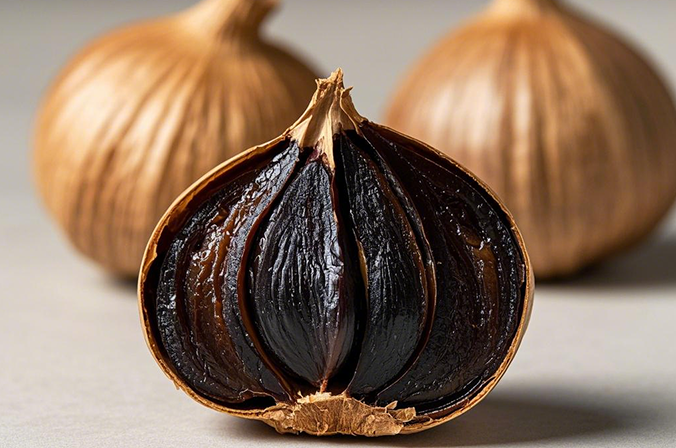
The result is a soft, jelly-textured clove that is black in appearance, mild and complex in flavor, free of raw garlic’s characteristic pungency, and significantly enriched in beneficial bioactive compounds. Research published in Molecules (2020) found that the fermentation process increases total phenolic content by up to 10 times compared to fresh garlic, substantially boosting antioxidant capacity.
Primary Production Methods
Three principal methods are used commercially to produce black garlic and its extract:
- Solid-State Fermentation: The most widely used industrial technique, involving fermentation of whole garlic bulbs under controlled temperature and humidity. It consistently produces the highest-quality flavor and nutritional profile and is the industry standard for premium extract production. Innovations including ultra-high pressure and microwave-assisted techniques have been incorporated to improve efficiency and nutritional outcomes.
- Liquid-State Fermentation: Garlic cloves are crushed, mixed with water, and fermented in liquid medium. This method provides better process control, higher scalability, and is well-suited to industrial production. The resulting extract demonstrates increased phenolic content and antioxidant activity.
- Ultra-High Pressure Treatment: An emerging technique that reduces fermentation time and production cost by applying high pressure to accelerate the transformation. While it enhances nutritional value and improves efficiency, challenges remain including sensory differences from traditionally fermented black garlic and ongoing safety evaluation for certain applications.
Following fermentation, the black garlic material undergoes extraction and standardization processes to produce a concentrated extract powder or liquid standardized to defined levels of key active compounds, most commonly S-allylcysteine (SAC) and polyphenols. This standardization is essential for consistent performance in commercial formulations.
Key Bioactive Compounds in Black Garlic Extract
The functional profile of black garlic extract is determined by a suite of bioactive compounds that either increase dramatically during fermentation or are formed de novo as a result of the transformation process. Understanding these compounds is foundational for both product development and quality assessment.
S-Allylcysteine (SAC)
SAC is the single most important and well-studied bioactive compound in black garlic extract. A stable, water-soluble sulfur-containing amino acid, SAC forms from the enzymatic breakdown of allicin and related precursors during fermentation. Research shows that fermentation increases SAC concentration by approximately 3.8 times compared to raw garlic.
SAC offers several significant advantages over the allicin found in raw garlic. It is chemically stable and not degraded by heat, storage, or gastric acid, which gives it superior bioavailability. It is also absorbed more efficiently by the gastrointestinal tract, meaning more of the active compound reaches systemic circulation. Scientific literature has documented SAC’s neuroprotective, cardioprotective, antioxidant, and hepatoprotective activities. For standardization purposes, premium black garlic extracts are typically specified at 0.8–1.5% SAC content.
Melanoidins
Melanoidins are high-molecular-weight nitrogen-containing polymers produced through the Maillard reaction during fermentation. They are responsible for the characteristic black coloration of fermented garlic and contribute significantly to its antioxidant properties. Melanoidins also demonstrate prebiotic properties, supporting beneficial gut microbiota composition — a benefit of growing commercial interest for gut health formulations.
Polyphenols and Flavonoids
Black garlic contains 5–10 times more polyphenols than raw garlic, making it one of the most polyphenol-dense botanical ingredients available. These compounds — including quercetin glycosides and other flavonoids — are potent free-radical scavengers that contribute to the extract’s superior antioxidant activity. Studies have demonstrated that the antioxidant activity of black garlic extract is 2–3 times higher than that of fresh garlic. The peak antioxidant content in fermented black garlic is typically reached at approximately 21 days of fermentation.
Organosulfur Compounds
While allicin is largely converted during fermentation, black garlic retains a range of stable organosulfur compounds including diallyl sulfide, diallyl disulfide, and allyl mercaptan. These compounds support hepatic detoxification by boosting glutathione production and play an important role in the extract’s anticancer, anti-inflammatory, and antimicrobial activities.
Amino Acids and Vitamins
Fermentation enriches black garlic with free amino acids beyond SAC, contributing to both its characteristic flavor and nutritional value. The B-vitamin complex present — including B6, B9 (folate), and B12 — supports red blood cell production, energy metabolism, and neurotransmitter synthesis. These components are of particular relevance for sports nutrition, general wellness, and hair health applications.
5-Hydroxymethylfurfural (5-HMF)
5-HMF is produced by the degradation of sugars during the Maillard reaction. It contributes to the sweet taste profile of black garlic and has been associated with anti-inflammatory and antioxidant activity. It functions synergistically with SAC and melanoidins to enhance the extract’s overall bioactivity.
Health Benefits of Black Garlic Extract
The bioactive compound profile described above translates into a well-documented range of health benefits. The following sections summarize the principal areas of activity supported by scientific evidence, which form the basis for commercial health claims in regulated markets.
Antioxidant Activity and Cellular Protection
Black garlic extract’s most extensively validated benefit is its exceptional antioxidant capacity. The combination of SAC, polyphenols, flavonoids, and melanoidins provides comprehensive protection against oxidative stress — a fundamental driver of cellular aging, chronic inflammation, and the pathogenesis of conditions including cardiovascular disease, cancer, and neurodegeneration.
Research in Food Science and Biotechnology demonstrated that black garlic antioxidants effectively neutralize free radicals, outperforming raw garlic across multiple assay models. The extract’s antioxidant capacity has been quantified at 2–3 times that of fresh garlic (Omar & Al-Wabel, 2010). For formulators, this positions black garlic extract as a premium choice for anti-aging supplements, antioxidant nutraceuticals, and protective skincare applications. The extract stimulates collagen synthesis, reduces UV-induced damage at the cellular level, and counters hyperpigmentation, making it increasingly relevant to the cosmetic and personal care industries.
Cardiovascular Health: Cholesterol and Blood Pressure Management
The cardiovascular benefits of black garlic extract represent one of its strongest clinical evidence bases. Multiple mechanisms contribute to its cardioprotective activity:
- LDL Cholesterol Reduction: Black garlic extract inhibits lipid accumulation and reduces oxidative modification of LDL cholesterol. Clinical research indicates it can reduce LDL levels by up to 15% (Jung et al., 2014). A human study with 60 participants consuming 6 grams of aged black garlic extract daily for 12 weeks demonstrated meaningful reductions in LDL and total cholesterol alongside increases in HDL cholesterol.
- HDL Enhancement: Regular consumption is associated with increased HDL (good cholesterol), which plays a critical role in reverse cholesterol transport and cardiovascular protection.
- Blood Pressure Regulation: SAC and related sulfur compounds promote vasodilation by stimulating endothelial nitric oxide production, reducing arterial stiffness and lowering blood pressure. Black garlic extract also appears to exert ACE-inhibitory effects — a mechanism similar to first-line antihypertensive medications — helping to regulate the renin-angiotensin-aldosterone system.
- Anti-Inflammatory Vascular Protection: Polyphenols in the extract reduce inflammatory mediators in blood vessel walls, addressing a key upstream driver of atherosclerosis.
A systematic review and meta-analysis published in Nutrients (Ried et al., 2020) confirmed that aged garlic extract formulations have a statistically significant effect on blood pressure reduction in hypertensive populations. These well-substantiated cardiovascular claims make black garlic extract highly attractive for heart health supplement lines and functional foods targeting cardiovascular wellness.
Liver Health and Hepatoprotection
The liver represents one of the most significant and commercially underexploited application areas for black garlic extract. Despite some consumer concern that garlic-based supplements could stress the liver, the scientific evidence points firmly in the opposite direction: black garlic extract is hepatoprotective, actively supporting liver function rather than impeding it.
Key mechanisms include:
- Antioxidant Enzyme Upregulation: Black garlic extract enhances the activity of superoxide dismutase, catalase, and glutathione peroxidase — the liver’s primary endogenous antioxidant defense enzymes — reducing oxidative damage to hepatocytes.
- Anti-Inflammatory Action: SAC and polyphenols inhibit NF-κB signaling and reduce production of pro-inflammatory cytokines in liver tissue, protecting against inflammation-driven fibrosis and damage.
- Detoxification Enhancement: Organosulfur compounds, particularly those supporting glutathione synthesis, enhance Phase II detoxification pathways in the liver, making the organ more efficient at processing and eliminating environmental toxins and metabolic waste products.
- Hepatocyte Regeneration: Research published in Molecules found that black garlic extract not only protects liver cells from damage but actively supports regeneration of hepatocytes.
Animal studies have demonstrated protection against ethanol-induced liver injury (Sato et al., 2006) and prevention of fatty liver development in high-fat diet models. Clinical research in Oxidative Medicine and Cellular Longevity (Wang et al., 2019) confirmed that black garlic polyphenols reduce liver inflammation and protect against toxin-induced damage in humans.
Cholesterol and Blood Lipid Management
Beyond the cardiovascular benefits noted above, black garlic extract demonstrates specific activity against the lipid abnormalities that underlie metabolic syndrome and type 2 diabetes risk. Animal studies have shown that black garlic extract reduces total blood triglycerides, total cholesterol, and LDL in high-fat diet models, while simultaneously improving insulin sensitivity and glucose metabolism. Research published in the Journal of Medicinal Food (2014) reported meaningful improvements in lipid profiles following black garlic supplementation. Improving insulin resistance by fermented black garlic has also been demonstrated in type 2 diabetic animal models (Lee et al., 2019).
Immune System Modulation
Black garlic extract exerts immunomodulatory activity through multiple complementary pathways, making it valuable for immune support formulations across a broad range of consumer segments:
- Macrophage Activation: Bioactive compounds in the extract enhance macrophage function, improving the innate immune system’s capacity to identify and eliminate pathogens. A study in Nutrition Research and Practice (Lee et al., 2021) confirmed macrophage activation by black garlic extract.
- Natural Killer (NK) Cell Enhancement: Black garlic extract boosts NK cell activity, strengthening immune surveillance against virus-infected and neoplastic cells.
- Cytokine Modulation: The extract helps regulate cytokine production, supporting balanced immune responses without promoting excessive pro-inflammatory signaling.
- Prebiotic Effects: Melanoidins and certain polysaccharides in black garlic extract promote the growth of beneficial gut bacteria, supporting the gut-associated lymphoid tissue (GALT) and the approximately 70% of immune function that resides in the gastrointestinal tract. Research published in the Journal of Functional Foods (Zeng et al., 2017) documented significant modulation of gut microbiota composition by black garlic extract.
- Antimicrobial Properties: Residual allicin derivatives and organosulfur compounds retain direct antimicrobial activity against a range of bacterial and viral pathogens.
Hair Growth Support
An emerging application area for black garlic extract is hair and scalp health. Scientific evidence supports multiple mechanisms by which the extract may contribute to improved hair density and follicle function:
- Follicle Cell Proliferation: Research shows that SAC activates the Wnt/β-catenin signaling pathway — a critical regulator of the hair growth cycle — increasing hair follicle cell proliferation by approximately 37% (Lee & Park, 2022).
- Scalp Microcirculation: A 2023 randomized controlled trial found that daily intake of 500 mg black garlic extract increased scalp microcirculation by 18% within 8 weeks, measured by laser Doppler imaging (Chen et al., 2023). Enhanced blood flow to hair follicles improves nutrient and oxygen delivery, supporting active growth phases.
- Oxidative Stress and Inflammation Reduction: Topical application of black garlic extract reduced malondialdehyde (a lipid peroxidation marker) by 42% in human hair follicles and suppressed pro-inflammatory cytokines IL-6 and TNF-α by 58% and 49% respectively (Wang et al., 2022). A 6-month clinical trial using a 2% black garlic extract serum recorded 22% higher hair density in participants compared to placebo (Kwon et al., 2023).
- Keratin Support: Sulfur is a critical building block of keratin, the structural protein composing approximately 90% of the hair shaft. Black garlic extract’s rich sulfur compound content supports keratin synthesis and hair structural integrity.
These findings are opening new formulation pathways for black garlic extract in professional hair care, scalp treatment serums, and oral hair health supplements — segments that represent significant growth opportunity for B2B ingredient buyers.
Additional Benefits: Emerging Research Areas
Beyond the well-established benefit categories above, research continues to identify additional areas of biological activity:
- Anti-Obesity Effects: Black garlic improves fat metabolism, promotes the browning of white adipocytes (thermogenic fat tissue conversion), increases energy expenditure, and reduces fat accumulation in high-fat diet animal models.
- Neuroprotection: SAC has demonstrated neuroprotective activity in models of neurodegenerative disease. Animal studies found that black garlic extract reduced brain inflammation associated with beta-amyloid deposits and improved short-term memory — suggesting potential applications in cognitive health formulations.
- Antitumor Properties: Preclinical studies indicate that black garlic extract can induce apoptosis in various cancer cell lines, including breast, colon, and gastric cancer, and may inhibit angiogenesis (the formation of new blood vessels that tumors require for growth). Sulfur compounds including diallyl disulfide and SAC appear to be primary mediators of this activity. These findings warrant continued research but represent an important scientific direction for the future.
- Blood Sugar Regulation: Multiple studies have found that black garlic extract improves insulin sensitivity and can help regulate blood sugar levels, making it relevant to metabolic health formulations targeting pre-diabetic and diabetic consumer segments.
- Athletic Performance: The extract’s vasodilatory and anti-inflammatory properties support exercise recovery by reducing exercise-induced oxidative stress, lowering inflammation, and potentially boosting stamina and endurance. These benefits are driving growing interest from sports nutrition formulators.
Black Garlic Extract vs. Regular Garlic: Key Differences
A clear comparative understanding of black garlic extract versus raw garlic is essential for communicating value to downstream customers and for positioning products in the marketplace. The two forms share a common botanical origin but differ substantially across every dimension that matters to manufacturers and consumers.
Bioactive Compound Profile
Raw garlic’s primary bioactive is allicin, a potent but highly unstable compound that is rapidly degraded by heat, oxidation, and gastric acid. This instability limits allicin’s bioavailability and therefore its practical efficacy in oral supplement applications.
Black garlic extract’s primary bioactive, SAC, is chemically stable under heat, storage conditions, and in the gastrointestinal environment. SAC is efficiently absorbed and reaches systemic circulation at significantly higher effective concentrations than allicin. Fermentation also increases total polyphenol content by up to 10 times, melanoidin content substantially, and stabilizes a broad range of organosulfur compounds into more bioavailable forms. The net result is an ingredient with measurably superior functional delivery in standardized formulations.
Antioxidant Capacity
Black garlic extract demonstrates 2–3 times higher antioxidant activity than fresh garlic across standard assays including DPPH, ABTS, and FRAP. For supplement and functional food applications where antioxidant efficacy is a primary selling point, this difference is commercially significant.
Sensory Properties and Consumer Acceptance
Raw garlic’s strong pungent odor and gastrointestinal irritation potential limit its use in many supplement and food applications. Consumer compliance with raw garlic supplements is poor due to the lingering odor. Black garlic extract, by contrast, has a mild, sweet flavor profile and produces no significant odor. It has substantially reduced gastrointestinal irritation compared to raw garlic or standard garlic oil preparations. This improved tolerability translates directly into better consumer compliance and broader product application opportunities.
Stability and Shelf Life
Black garlic’s fermentation process produces compounds that are significantly more shelf-stable than allicin. Whole black garlic cloves can be refrigerated for up to 6 months. Standardized extract powders, properly manufactured and stored, maintain potency for typical botanical extract shelf lives of 24–36 months. This stability simplifies logistics and quality management for buyers integrating the extract into finished product lines.
Cost and Value Positioning
Black garlic extract commands a premium price relative to standard garlic powder or garlic oil. Wholesale black garlic costs $10–$20 per pound compared to $1–$3 per pound for regular garlic, reflecting the specialized equipment, extended production time (15–40 days of controlled fermentation), and higher energy costs involved in its manufacture. Additionally, fermentation causes 30–50% weight loss, requiring more raw garlic input per unit of finished material.
For B2B buyers, this cost premium must be contextualized by the value equation: black garlic extract’s superior bioavailability, enhanced functional performance, better consumer tolerance, and strong clean-label positioning support higher end-product pricing and improved margin structure. Brands utilizing black garlic extract can command premium pricing across supplement, functional food, and cosmetic categories. A specialty sauce incorporating black garlic can readily command two to three times the retail price of a comparable product made with regular garlic.
B2B Applications and Market Opportunities
Black garlic extract’s versatile functional profile and strong consumer appeal create multiple high-growth commercial applications across several industry sectors.
Dietary Supplements and Nutraceuticals
This is the largest and most established market for black garlic extract. Key formulation formats include:
- Capsules and softgels standardized to SAC content for cardiovascular, antioxidant, immune, and liver health claims
- Tablets for heart health, cholesterol management, and metabolic wellness positions
- Powdered extract blends for combination antioxidant formulas
- Liquid extracts and tinctures for premium, bioavailability-focused product lines
Functional Foods and Beverages
The clean label, mild flavor, and strong health narrative of black garlic extract make it attractive across the functional food and beverage segment:
- Antioxidant-enriched beverages and effervescent health tablets
- Functional condiments including sauces, dressings, and marinades where both flavor and health positioning are leveraged
- Confectionery and preserved products incorporating natural sweetness and health benefits
- Health shots and ready-to-drink wellness beverages
Sports Nutrition
Growing recognition of black garlic extract’s vasodilatory, anti-inflammatory, and recovery-support activities is driving adoption in sports nutrition applications:
- Pre-workout formulas leveraging nitric oxide-boosting effects
- Recovery supplements targeting exercise-induced oxidative stress and muscle inflammation
- Endurance performance blends
Cosmetics and Personal Care
The antioxidant and anti-inflammatory properties of black garlic extract are increasingly attractive for topical applications:
- Anti-aging serums and facial treatments targeting collagen synthesis and UV protection
- Scalp serums and hair growth treatments leveraging follicle-stimulating mechanisms
- Oral hair supplement capsules for systemic hair and scalp health support
Market Outlook
The global black garlic extract market is projected to grow at approximately 12.5% CAGR through 2030, driven by rising demand for natural antioxidants over synthetic alternatives, increasing use in functional foods and nutraceuticals, and the incorporation of fermented functional ingredients into mainstream personal care. Key demand markets include the United States, Japan, South Korea, Germany, and the United Kingdom, with strong growth emerging across Southeast Asia and Australia. Consumer preference is shifting toward standardized, traceable botanical ingredients with documented clinical support — precisely the profile that high-quality black garlic extract delivers.
Quality Standards and Sourcing Considerations
For B2B buyers, the quality of black garlic extract is determined by a set of well-defined parameters. Understanding these standards is essential for selecting a reliable supplier and ensuring that sourced material performs consistently in finished formulations.
Standardization to Active Compounds
The most important quality indicator for black garlic extract is standardization to S-allylcysteine (SAC) content. Premium extracts are specified at 0.8–1.5% SAC, with some high-potency grades reaching higher concentrations. Polyphenol content — typically expressed as a percentage of total polyphenols — is a secondary standardization marker relevant to antioxidant activity claims. Buyers should request Certificates of Analysis specifying both parameters, along with HPLC method validation data, to confirm analytical reliability.
Third-Party Testing and Certification
Reputable suppliers provide third-party laboratory verification of every production batch for:
- Heavy metal content (arsenic, cadmium, lead, mercury) against pharmacopoeial limits
- Pesticide residue screening
- Microbial contamination (total plate count, yeast and mold, specified pathogens)
- Solvent residues where applicable to extraction method
- Identity confirmation by HPLC or TLC fingerprint
Raw Material Traceability
The quality of the finished extract is only as good as the raw garlic entering the production process. Leading suppliers source garlic from carefully selected, monitored farms with documented agricultural practices. Traceability documentation from farm to finished extract — including country of origin, variety, and agrochemical use records — is a minimum requirement for buyers supplying regulated markets in the EU, US, and Japan.
Production Standards and Certifications
Buyers should verify that potential suppliers operate under relevant quality management frameworks including:
- GMP (Good Manufacturing Practice) certification, ideally to pharmaceutical-grade standards
- HACCP certification for food safety management
- Organic certification where required by downstream customers
- Non-GMO verification
- Halal and/or Kosher certification as applicable to target markets
Customization and Technical Support
High-quality suppliers offer customizable extract specifications — varying SAC concentration, polyphenol standardization, particle size, and extract format (powder, granule, liquid) — to meet the specific requirements of different formulation types. Technical support for formulation development, regulatory documentation preparation, and stability testing is an important differentiator when selecting a long-term supply partner.
Supply Chain Stability
Black garlic production is more supply chain-intensive than commodity botanical extracts due to the specialized fermentation infrastructure and extended production timelines required. Buyers should evaluate supplier production capacity, inventory management practices, and contingency sourcing arrangements to ensure continuity of supply for commercial-scale production programs.
Frequently Asked Questions
What is the standard SAC content for a pharmaceutical-grade black garlic extract, and why does it matter for formulation?
Premium black garlic extracts are typically standardized to 0.8–1.5% S-allylcysteine (SAC) content. SAC is the primary bioactive compound responsible for the cardiovascular, antioxidant, and hepatoprotective effects that are most strongly supported by clinical evidence. Standardization to a defined SAC level ensures batch-to-batch consistency in functional performance — which is critical for supplement manufacturers making specific health claims and for ensuring that clinical evidence derived from standardized extracts can be legitimately applied to a finished product. Extracts with undeclared or non-standardized SAC content introduce unacceptable variability for serious B2B applications.
How does black garlic extract differ from aged garlic extract, and which is more suitable for supplement applications?
While both black garlic extract and aged garlic extract (AGE) are fermentation-modified garlic products with elevated SAC content, they are produced by distinctly different processes. Aged garlic extract is produced by storing garlic cloves in aqueous alcohol for up to 20 months at ambient temperature, resulting in a milder transformation with retained firmness and a subdued flavor. Black garlic is produced through high-temperature, high-humidity fermentation that triggers the Maillard reaction, producing melanoidins and the characteristic black coloration alongside significantly higher polyphenol concentrations. Black garlic extract generally demonstrates higher total antioxidant capacity than AGE and offers the additional benefit of prebiotic melanoidins. Both are commercially viable, and product selection should be guided by the specific health claim focus and formulation requirements of the end product.
What are the primary applications driving demand for black garlic extract in the B2B market?
In the B2B botanical extract market, the three largest application segments for black garlic extract are: cardiovascular health supplements (targeting cholesterol management and blood pressure regulation), antioxidant and anti-aging nutraceuticals, and immune support formulas. The liver health supplement segment is growing rapidly as consumer interest in hepatic wellness increases. Emerging high-growth applications include hair and scalp health products (both topical and oral), sports nutrition and recovery supplements leveraging the extract’s vasodilatory and anti-inflammatory properties, and functional food and beverage formulations capitalizing on the ingredient’s clean flavor and strong consumer health narrative. Topical cosmetic applications in anti-aging and scalp care represent further growth opportunities for specialized buyers.
How should black garlic extract be stored, and what is its typical shelf life?
Properly manufactured and packaged black garlic extract powder should be stored in a cool, dry location away from direct light and moisture — ideally in a temperature-controlled warehouse at 15–25°C with relative humidity below 60%. Under these conditions, extract powder maintains potency for 24 months from the date of manufacture when stored in sealed, moisture-barrier packaging. Liquid extracts require refrigeration after opening and have a shorter opened shelf life. Buyers should request supplier-specific stability data and recommended storage conditions as part of the product specification package. Established suppliers provide validated stability testing data supporting the stated shelf life.
What quality certifications and documentation should buyers request from a black garlic extract supplier?
For regulated markets, B2B buyers should request the following documentation from any black garlic extract supplier: a Certificate of Analysis (CoA) from each production batch confirming active compound levels (SAC, total polyphenols), heavy metals testing results, pesticide residue analysis, and microbial contamination data. Documentation of GMP certification, HACCP compliance, and relevant third-party audits is essential. For products targeting organic or non-GMO markets, corresponding certification documentation must be provided. Buyers supplying EU markets should also confirm compliance with EC No. 1334/2008 (flavouring regulations) and Novel Food status where applicable. For US dietary supplement markets, verification of compliance with 21 CFR Part 111 (cGMP for dietary supplements) and availability of technical regulatory support for structure-function claim substantiation are important considerations. A reputable supplier will provide all documentation proactively and maintain it current through each new production lot.
Looking for Premium Plant Extracts?
Green Life Herb supplies 280+ botanical extracts with ISO/HALAL/Kosher certifications.
Custom specifications and sample orders available.